Pausing Before You Act - Make It a Meta-Habit
How A Tiny Moment Unlocks Clarity, Choice, And Self-Leadership

Pausing Before You Act - Setting The Scene
This article explores how pausing before you act interrupts reactive loops, gives the thinking brain a chance to show up, and helps you choose rather than be driven.
If you make this pause a habit, it will have a positive influence on every other habit you care about - it becomes a meta-habit.
You’ll see how developing this skill - in the middle of emails, meetings, conflict, or scrolling - can quietly reshape the way you think, respond, and lead your own life.
The Environment
There is a moment in life so subtle you barely register it.
A colleague questions your idea. A notification flashes. A moment of uncertainty grips us.
Before you consciously engage, the words leave your mouth, the impulse becomes a click, the feeling becomes a reaction.
You often only realize what happened after the consequences arrive.
Most days, the world presses buttons inside you and you respond automatically - frustration here, avoidance there, a quick dopamine hit to relieve the discomfort of boredom or stress.
Life becomes a tug-of-war between triggers and habits, between urgency and whatever scraps of attention you have left.
What if the most powerful shift in transforming this pattern isn’t a new productivity hack, discipline method, or stress-management technique?
What if the real change comes from inserting something small and often ignored?
A pause.
Why You React So Fast
Reactivity isn’t a flaw — it’s ancient wiring.
Your nervous system is designed to keep you safe by acting quickly. In the past, speed meant survival. But today, a sharp email isn’t a tiger. A delayed response isn’t a threat. A difficult feeling doesn’t require immediate escape.
Yet your body still treats everyday challenges as if they’re emergencies. This is why, you:
- Speak before you think
- Click before you reflect
- Defend before you understand
- Distract yourself before you feel
The result:
The Space Between Stimulus and Response
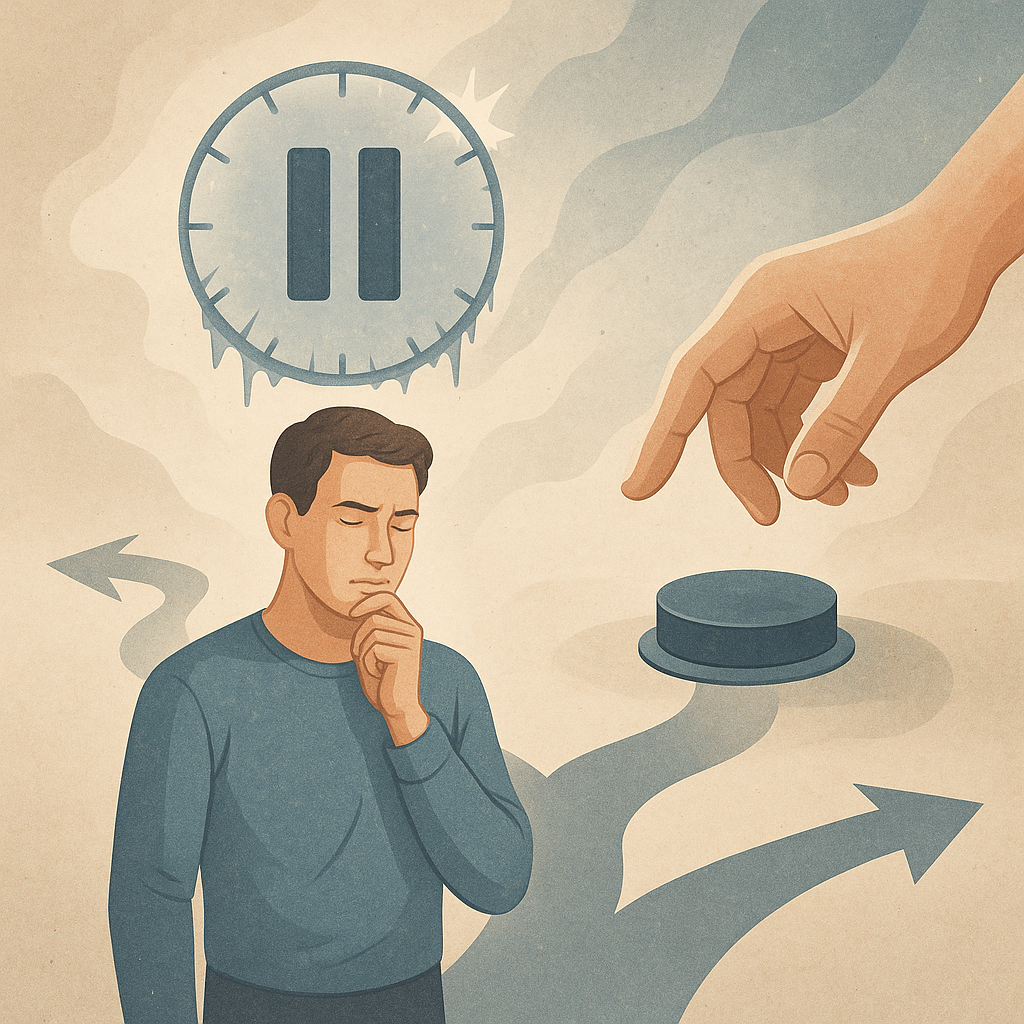
The pause is simple:
Something happens → you take a moment → then act.
It sounds small, but in practice it represents a shift in identity.
Instead of being inside the moment, you are now aware of the moment.
This is where conscious choice begins.
A pause isn’t hesitation. It isn’t weakness. It isn’t disengagement.
It is permission for wisdom to catch up.
Even a single breath can:
- Change your state enough to see clearly.
- Slow the emotional surge.
-
Invite a different question:
“What is actually needed here?”
When you pause, you are no longer a passenger.
You are back in the driver’s seat.
A Story of One Breath
Picture someone typing a heated reply late at night.
Their jaw is tense; their breath quickens. Their fingers move fast - action feels justified.
Then - a flicker of awareness. A breath.
The message remains unsent.
The story in their head begins to soften. Options appear that weren’t visible seconds earlier.
This is the pause at work - a turning point disguised as stillness.
The Pause as a Meta-Habit
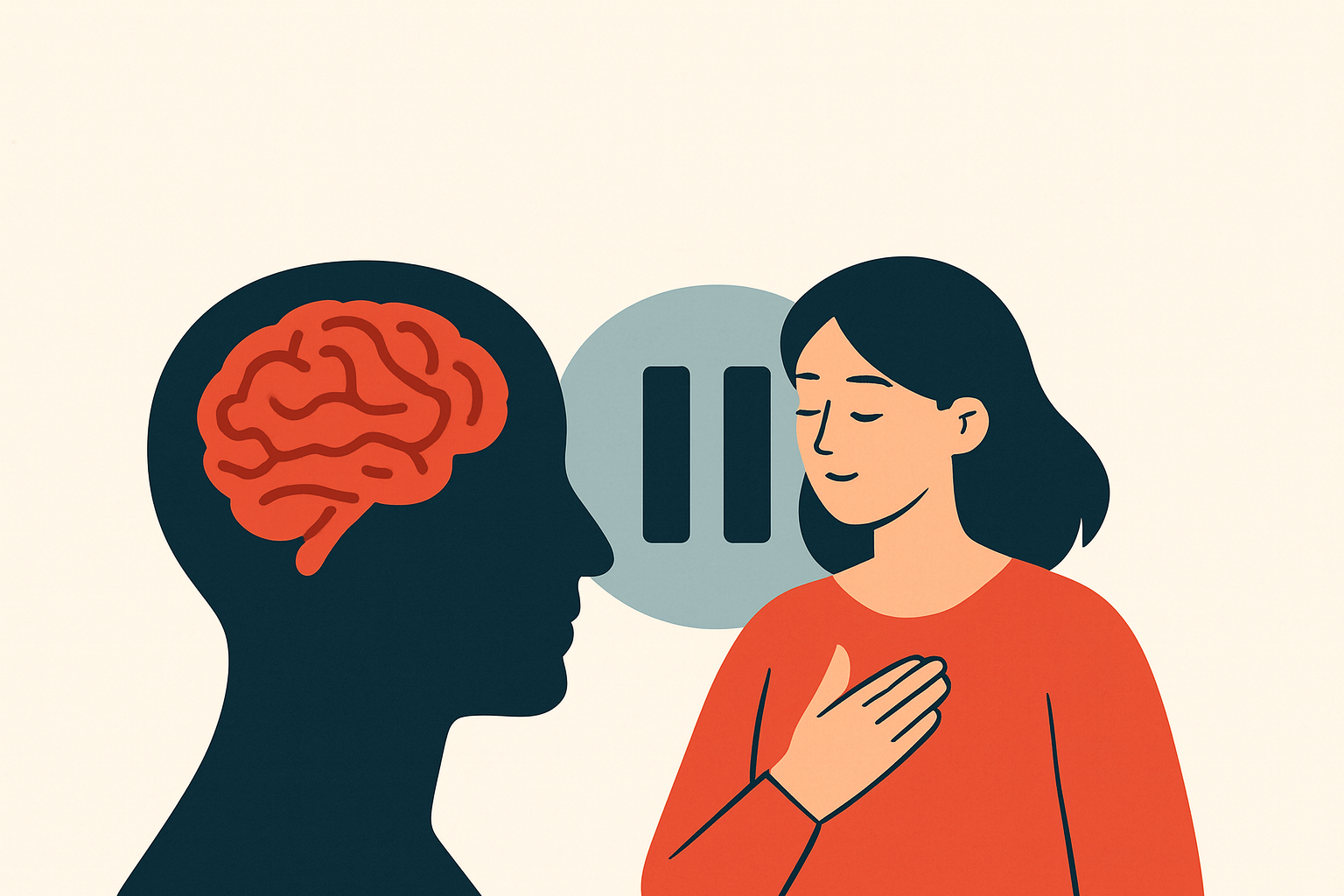
Most habits operate on the surface: what you eat, how you speak, what you do with your time.
Pausing before acting operates deeper - it shapes the behavior that follows.
It strengthens:
- Communication
- Emotional resilience
- Decision quality
- Presence
- Boundaries
- Productivity
- Self-regulation
- Leadership
Because every action begins in your mind, the pause upgrades the entire system.
- It removes regret before regret exists.
- It protects goals before they are sabotaged.
- It brings your future self into the room.
A delayed response is a much better response.
What Happens in the Pause
Neurologically, the pause gives your thinking brain a chance to re-engage.
Emotionally, it prevents overwhelm from taking charge.
Practically, it allows alignment: "Is this who I want to be right now?"
Consciously or not, you are asking:
- "What is the wise thing here?"
- "What matters most?"
- "Is this reaction coming from clarity or fear?"
That tiny reflection transforms the moment from automatic to intentional
Why This Skill Is Hard
We forget to pause — especially when it matters most.
Reactivity feels fast. It feels productive. It feels like strength, like we are “doing something.”
Pausing, by contrast, can feel like weakness or vulnerability.
Training the Pause in Real Life
Transformation begins not with slowing down the world,
but with slowing down the first second of your response.
A few practical approaches:
The One Breath Reset
Before you act, one slow inhale, slow exhale.
The moment expands. You see more clearly.Notice and Name
Quietly acknowledge:
- “This is frustration.”
- “This is urgency.”
- “This is insecurity speaking.”
Naming disrupts the spell of the emotion.
Anchor to Daily Triggers
Pick one routine cue today - opening email, receiving a message, reaching for your phone - and commit to a pause before every action in that context.
These practices are not about appearing calm - they are about being in charge.
Signs the Habit Is Working
You’ll notice shifts that seem small from the outside but are life-changing internally:
- Heat rises — but the reaction doesn’t follow automatically.
- You catch emotional stories before they take over.
- Silence becomes an option.
- Decisions are less rushed.
- Clarity shows up more reliably.
Growth isn’t measured in how rarely you react - but in how often you remember to pause.
Even noticing after the fact is progress. That awareness will slowly move earlier - until the pause becomes automatic.
Where Pausing Changes Everything
Imagine if you paused - before:
- The argument escalated.
- The impulse purchase.
- The late-night scroll.
- Saying yes while meaning no.
- Assuming intention.
- Sending the message that would be regretted later.
- Letting fear dictate a decision.
These moments shape:
- Relationships
- Reputation
- Finances
- Health
- Emotional well-being
- The direction of your life
The pause doesn’t erase emotion - it redirects energy toward what [and who] matters.
Who You Become When You Pause

Pausing before you act makes space for:
- Self-leadership instead of self-sabotage
- Courage instead of avoidance
- Listening instead of defending
- Choice instead of compulsion
- Presence instead of distraction
It turns intention into reality, and clarity into action.
It helps you respond to life rather than be driven by it.
A moment of awareness - repeated often enough will change the way you live.
Recommended Further Reading
- The Law Of Response and Outcome - A New Approach To A New Life
- The Wise Advocate - Helping You Achieve The Very Best Outcome
- The Power Of Silence - A Delayed Response Is A Better Response
- Rewiring Your Autopilot – How To Harness Your Subconscious Mind
Return from: "Pausing Before You Act" to: Inner Mastery For Outer Impact or Walking The Talk
Next Article: How to See Your Thoughts Without Becoming the Story

LATEST ARTICLES


Belief and Thought: What Zen Tools Works With - What It Leaves Alone
 A Clarification Of Scope Within Zen Tools - Not A Position On Belief As soon as people begin to notice their own thinking more clearly, questions about belief and thought naturally follow: - If though…
How Thought Becomes Identity - The Hidden Mechanism Behind Overthinking, Self-Worth, and Inner Conflict
 Thought Is an Event, Not a Self Most people believe identity is something they have - a stable sense of who they are. In reality, identity is something the mind is continuously producing. It is not fo…
When the Brain Is Hijacked - Where Does Choice Sit?"
 Pressure, the Hijacked Brain, and the Question of Authority
When the brain is hijacked, people are often told they have “lost control”.That language is understandable - and misleading. In reality, man…
Pressure, the Hijacked Brain, and the Question of Authority
When the brain is hijacked, people are often told they have “lost control”.That language is understandable - and misleading. In reality, man…Reduce Digital Overthinking To Lower Your Constant Inner Noise
 Why Constant Micro-Stimulation Increases Your Internal Noise. Modern digital life generates a level of mental activity that previous generations never had to deal with, and this is fundamentally why w…
Pausing Before You Act - Make It a Meta-Habit
 How A Tiny Moment Unlocks Clarity, Choice, And Self-Leadership. There is a moment in life so subtle you barely register it. A colleague questions your idea. A notification flashes. A moment of uncerta…
How to Interrupt Emotional Spirals Using Thought-Awareness
 The spiral is fueled by your mind believing the story your thoughts tell. No one sets out to be swept away by a surge of emotion. One second you’re handling life, and the next, your mind has broken in…
Universal Awareness and the Machinery of Thought
 You Can’t Control Thoughts - But You Can Learn To See Them. Why do our thoughts have so much power over us - and how do we reclaim clarity? The foundation of thought-awareness is the ability to see yo…
Rewiring Your Autopilot – How To Harness Your Subconscious Mind
 How to harness your subconscious mind and move from passenger to pilot. The case for rewiring your autopilot is that most of what drives your thoughts, reactions, and decisions happens below your cons…
Why You Need To Be Intimate With Your Own Thinking
 How self-awareness and insight transforms delusion into wisdom. We live inside an invisible weather system - one made not of clouds and wind, but of thoughts - and this invisibilty is why you need to…
The Illusion of Closeness in Always-On Relationships
 Closeness that cannot survive absence was never intimacy - only constant stimulation mistaken for connection. We live inside an unprecedented experiment in human connection. For the first time in hist…
Why Approval Feels Like Safety And Distance Feels Like Danger
 Safety is not found in being approved - it appears when approval is no longer required. When approval feels like safety, connection stops being something we enjoy and quietly becomes something we rely…
You Do Not Need Better Boundaries - You Need Clearer Thought
 What no longer feels like your responsibility no longer crosses your boundaries. This article explains why you don’t need better boundaries - you need clearer thought - how modern life systematically…