The Kingdom Is Here, Now
Awakening Is Not Later
What contemplative traditions point to - and how progress quietly replaces presence

The Kingdom Is Here - Setting The Scene
Across contemplative traditions, a strikingly consistent message appears: truth is not somewhere else, not in the future, and not waiting to be attained - the kingdom is here, now.
Whether expressed as the kingdom of God, awakening, enlightenment, or simple awareness, the invitation is always to what is already present - here, now. And yet, in practice, this message is almost always transformed into something else.
- Presence quietly becomes progress.
- Immediacy turns into aspiration.
- Awakening is relocated into a future state we hope to reach.
This article explores how that shift happens - not as a failure of discipline or sincerity, but as a predictable psychological response to insight itself.
When insight destabilises our sense of self, the mind often restores balance by turning understanding into a developmental identity: stages, levels, advancement, and spiritual “becoming".
Drawing on examples from Buddhism and Christianity, alongside contemporary psychology and neuroscience, this article introduces a different framing: growth without identity upgrade.
It argues that real development does occur - but not as an improved self. What grows is capacity, not identity; clarity, not status.
The aim here is not to diminish practice, but to protect it - by restoring the immediacy it was always pointing toward.
__________
The Kingdom Is Here, Now - Or Is It?
There is a sentence attributed to Jesus that many Christians know well and few take seriously: “The Kingdom of God is among you.”
When Jesus says that the kingdom is here, he is not pointing to a future salvation or delayed fulfilment, but to a present reality that can be lived and participated in now.
In much the same way, early Buddhist teachings repeatedly point to awakening as something not acquired or accumulated, but recognised.
And yet, across monasteries, retreat centres, mindfulness programmes, and spiritual communities, the lived assumption often contradicts this entirely:
- Awakening is treated as a destination.
- Growth is framed as ascent.
- The present moment becomes a means to an end rather than the end itself.
This is not a theological mistake so much as a human one.
When insight occurs, even briefly, it disrupts the usual organisation of self. The familiar sense of “me moving through time toward improvement” loosens. For a moment, the world is simply here, without commentary. But that destabilisation rarely lasts. The
mind responds by doing what it does best: rebuilding coherence. And one
of the most reliable ways it does this is by translating insight into
progress: "Something happened to me... I am further along... this must mean something about who I am now." Insight quietly becomes identity.
When Presence Turns into Progress

This pattern appears across traditions, regardless of doctrine. In Buddhism, awakening is explicitly described as non-acquisitional - nothing is added, nothing gained.
And yet, the lived culture of practice is often structured around stages, attainments, and hierarchical expertise.
In Christianity, Jesus’s declaration that the kingdom is here and his emphasis on immediate participation in God’s reality becomes, over centuries, a theology of delayed salvation and future reward.
The Kingdom moves from presence to promise.
This shift is rarely deliberate. It emerges from a basic psychological need for continuity.
Research in narrative identity shows that human beings rely on coherent self-stories to maintain emotional stability and agency over time [McAdams, 2001].
When contemplative insight interrupts that story - even in gentle ways - the system compensates:
- Developmental language restores a sense of direction.
- Spiritual progress provides meaning.
- Identity reasserts itself, now wearing contemplative clothing.
What is lost in the process is not truth, but immediacy.
__________
Growth Without Identity Upgrade
The alternative proposed here is not anti-growth, anti-discipline, or anti-tradition. It is more precise than that.
Growth without identity upgrade distinguishes between changes in capacity and changes in self-concept.
The two are often conflated, but they are not the same.
Capacity refers to what experience can be held without collapse: emotional intensity, uncertainty, ambiguity, discomfort, even joy.
Capacity can and does grow. Neuroscience research on mindfulness shows increased functional connectivity between prefrontal regulatory regions and limbic systems, suggesting greater emotional regulation without suppression [Judson Brewer, 2011]. Attention stabilises. Reactivity decreases. Behaviour changes.
But none of this requires a new or improved identity.
Identity upgrade, by contrast, is the story that I am now more awake, more advanced, or further along.
This narrative is subtle, often unspoken, and socially reinforced. It is also where practice begins to distort.
- Once growth is framed as becoming someone, comparison is inevitable.
- Regression becomes a threat.
- Presence is replaced by performance.
___________
Buddhism: Awakening Without Attainment
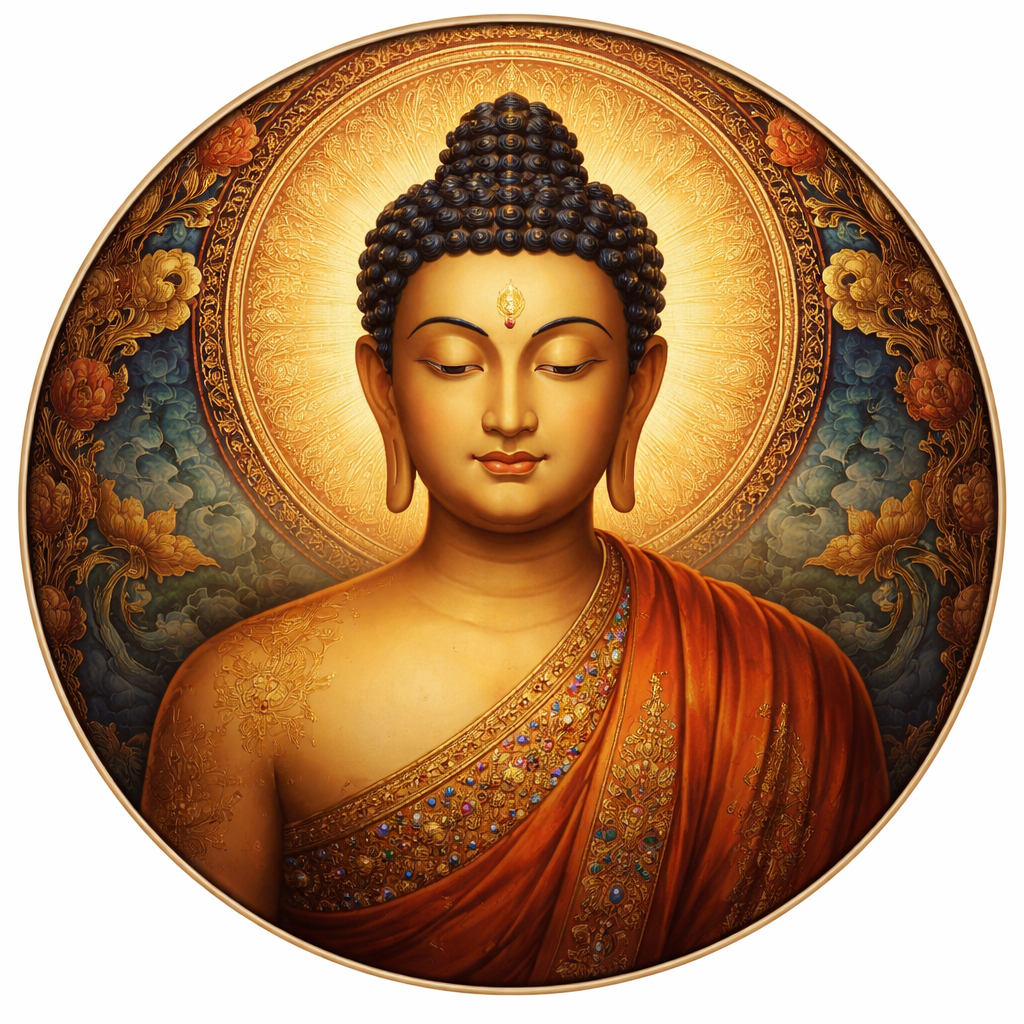
Classical Buddhist teaching is unambiguous on one point: there is no enduring self to upgrade.
And yet, contemporary practice environments often operate as if there were. Practitioners talk - sometimes quietly, sometimes openly - about where they are on the path.
Insight experiences are ranked. Teachers are implicitly or explicitly elevated.
What is often missed is that awakening, in its original framing, is not an event in time but a shift in relationship.
Nothing new appears; something ceases to dominate. Thoughts still arise. Emotions still fluctuate.
What changes is the degree to which thoughts and emotions are automatically granted decision-making authority over behaviour.
Psychological research on decentring supports this distinction. Studies show that the ability to observe thoughts as mental events - rather than facts or commands - correlates with reduced rumination and emotional distress [Teasdale et al., 2002].
The content of experience does not improve; the relationship to it does. No identity upgrade is required.
__________
Christianity: The Kingdom Without Delay
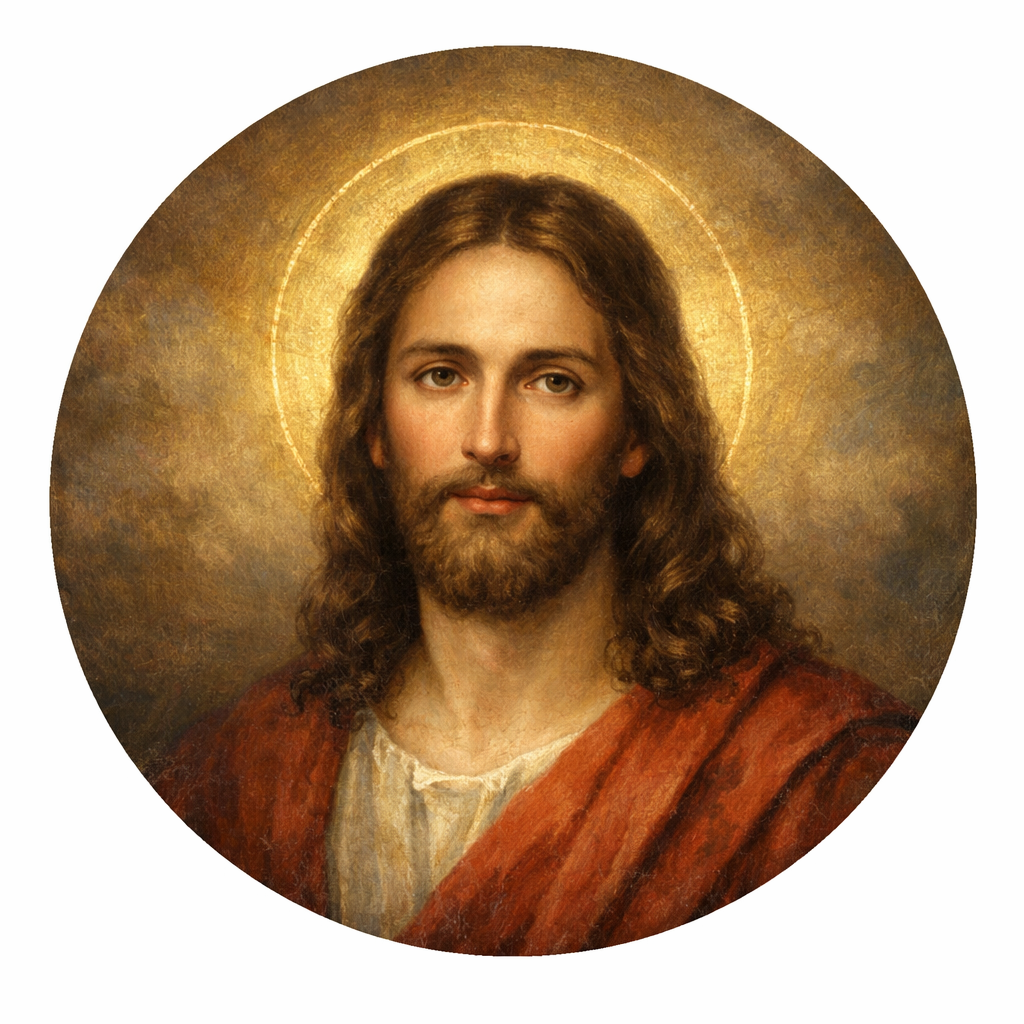
A similar pattern appears in Christianity, though it is often harder to see because of doctrinal overlay.
Jesus’s teaching consistently points to immediacy: God’s reality is available now, not later. And yet, much of Christian theology relocates transformation into the future - salvation after death, fulfilment after judgment, wholeness after moral correction.
Contemporary non-dual Christian thinkers such as Marshall Davis have argued that this represents a quiet reversal of the original message: belief replaces participation, and future hope replaces present availability.
The kingdom becomes something to reach rather than a recognition that the kingdom is here.
From a psychological perspective, this mirrors the same identity dynamics seen in contemplative practice:
- Faith becomes something one has rather than a mode of being.
- Righteousness becomes a marker of status.
- The immediacy of presence is lost beneath aspiration.
__________
Why This Drift Is So Persistent
It is tempting to treat this as a failure of tradition or leadership. But the mechanism is more basic than that.
Human cognition is future-oriented by default. Anticipation, planning, and self-modelling are essential for survival.
Neuroscience shows that the brain’s default mode network is heavily involved in constructing narratives about past and future self [Raichle et al., 2001].
Contemplative insight disrupts this system - briefly quieting narrative self-reference.
The discomfort that follows is not spiritual immaturity. It is neurological unfamiliarity. And the mind’s response is to restore narrative continuity - often by converting insight into progress.
The problem is not that traditions talk about growth.
It is that they rarely distinguish what is growing.
Practice Without Becoming Someone

Practising without becoming someone else does not require a new technique. It requires a different relationship to what is already happening during practice.
In most contemplative settings - meditation, prayer, or reflective silence - attention is placed on an object: the breath, a prayer phrase, a passage of Scripture, awareness itself.
Alongside this, a second process almost always runs quietly in the background: evaluation:
"Is this working? Am I doing this properly? Is this deeper than last time?"
Over time, these evaluations accumulate into a sense of progress or failure, and gradually into identity.
Practising without identity upgrade begins by noticing this evaluative layer without engaging it.
Distraction is treated as an event, not a problem and not a signal about the self. Attention returns - without commentary. Calm, clarity, emotional warmth, or insight are allowed fully, but without being interpreted.
No interpretation is made, no conclusion is drawn about what they mean or what they say about the practitioner. What changes over time is not experience itself, but where decision-making authority sits. Thoughts,
emotions, and spiritual interpretations still arise, but they no longer
decide what happens next. They are not promoted into verdicts,
explanations, or self-descriptions. At a practical level, this can be distilled into a small set of operational moves, which apply regardless of tradition:
Nothing here aims at improvement. Nothing is accumulated. Each practice period stands alone.
Over time, this produces a specific kind of growth:
- Increased capacity to remain present without interference.
- The nervous system becomes more tolerant of intensity and uncertainty.
- Behaviour becomes less reactive.
- These changes are functional, not personal.
- They do not require a story.
___________
Applied to a Traditional Christian Practice Context
In a Christian setting, the same mechanics apply - even though the language is different.
During prayer, Scripture reading, or worship, experiences often arise: reverence, peace, dryness, guilt, consolation, insight.
These are commonly interpreted as signals of spiritual state - closeness to God, faithfulness, maturity, or failure. This is where identity quietly enters.
Practising without identity upgrade does not mean rejecting meaning or faith. It means refusing to turn experience into a verdict about the self.
Practically, this looks like:
- Prayer continues whether the experience feels rich or empty.
- Consolation is allowed without being claimed as spiritual progress.
- Dryness is allowed without being treated as regression or deficiency.
- Interpretations about what the experience “means” are noticed but not obeyed.
- Decision-making authority remains grounded in the act of prayer itself, not in the evaluation of how it feels.
In this way, the teaching that the kingdom is here is honoured not as an idea, but as a lived experience.
Presence is not replaced by assessment. Faith is not measured by experience. Growth shows itself as increased capacity to remain present with experience [without turning it into a verdict] - not as a more spiritual identity.
Crucially, nothing needs to be remembered, accumulated, or protected. There is no obligation to live up to past insight or spiritual self-image.
What matters is not continuity of identity, but the repeated placement of decision-making authority above whatever experience is present, moment by moment.
The Kingdom Is Here - Closing Observations

When progress falls away and presence is no longer postponed, the insight behind the kingdom is here stops being an idea and becomes a lived experience.
Reflections
These are reflective diagnostics - not instructions.
- When practice feels “good” or “poor”, what story does the mind begin to tell about me?
- Which experiences in practice do I tend to interpret as progress or failure?
- Where do I rely on memory of past insight to define how I should be now?
- If no one else ever knew about my practice, what would still matter about it?
- What feels most unsettling about the idea that nothing needs to be achieved?
These reflections prepare the ground. They do not demand change.
Action Points
None of the following actions are intended to produce a better self. They are ways of preventing practice from being quietly taken over by identity.
These action points now support and stabilise the practice mechanics already described above, rather than duplicating them.
[1] Shift what you evaluate
- Notice when attention moves from "what is happening" to "what this says about you".
- No correction is required.
- Simply recognise that evaluation is present and allow practice to continue without responding to it.
[2] Let practice stand alone
- Treat each period of prayer, meditation, or reflection as complete in itself.
- Do not carry conclusions forward.
- Do not reconcile it with previous sessions.
- Continuity of identity is not required.
[3] Remove outcome reinforcement
For a period, refrain from:
- Logging insights
- Summarising sessions
- Comparing experiences over time
This is not withdrawal of commitment. It is removal of identity reinforcement.
[4] Use behaviour as the reference point
Instead of asking whether practice is working, notice small functional shifts:
- Slightly less reactivity
- Slightly more pause before response
- Slightly more tolerance of uncertainty
These are not achievements. They are signals that authority is no longer being handed to urgency or self-evaluation.
[5] When seeking appears, do not resolve it
- When the sense of “not there yet” arises, let it be present without explanation or fulfilment.
- Seeking does not require suppression - and it does not need to decide what happens next.
Academic & Source References
- McAdams, D. P. (2001). The Psychology of Life Stories.
- Raichle, M. E., et al. (2001). A Default Mode of Brain Function.
- Teasdale, J. D., et al. (2002). Metacognitive awareness and prevention of relapse in depression.
- Arnsten, A. F. T. (2009). Stress signalling pathways that impair prefrontal cortex structure and function.
- Brewer, J. A. (2011). Meditation experience is associated with differences in default mode network activity and connectivity.
- Davis, M. (2019). Christianity Without Beliefs.
Recommended Further Reading To Support Your Practice
- Zen Enlightenment – The End of Delusion?
- Stuck In Seeking
- How to See Your Thoughts Without Becoming Them
- Why Insight Alone Does Not Change Behaviour
- Does Prayer Work? The Psychology of Prayer, Meaning and Belief
Return from: "The Kingdom Is Here" to: Home Page or Inner Mastery For Outer Impact
Next Article: Adult Development Without Becoming Someone Else

LATEST ARTICLES


Belief and Thought: What Zen Tools Works With - What It Leaves Alone
 A Clarification Of Scope Within Zen Tools - Not A Position On Belief As soon as people begin to notice their own thinking more clearly, questions about belief and thought naturally follow: - If though…
How Thought Becomes Identity - The Hidden Mechanism Behind Overthinking, Self-Worth, and Inner Conflict
 Thought Is an Event, Not a Self Most people believe identity is something they have - a stable sense of who they are. In reality, identity is something the mind is continuously producing. It is not fo…
When the Brain Is Hijacked - Where Does Choice Sit?"
 Pressure, the Hijacked Brain, and the Question of Authority
When the brain is hijacked, people are often told they have “lost control”.That language is understandable - and misleading. In reality, man…
Pressure, the Hijacked Brain, and the Question of Authority
When the brain is hijacked, people are often told they have “lost control”.That language is understandable - and misleading. In reality, man…Reduce Digital Overthinking To Lower Your Constant Inner Noise
 Why Constant Micro-Stimulation Increases Your Internal Noise. Modern digital life generates a level of mental activity that previous generations never had to deal with, and this is fundamentally why w…
Pausing Before You Act - Make It a Meta-Habit
 How A Tiny Moment Unlocks Clarity, Choice, And Self-Leadership. There is a moment in life so subtle you barely register it. A colleague questions your idea. A notification flashes. A moment of uncerta…
How to Interrupt Emotional Spirals Using Thought-Awareness
 The spiral is fueled by your mind believing the story your thoughts tell. No one sets out to be swept away by a surge of emotion. One second you’re handling life, and the next, your mind has broken in…
Universal Awareness and the Machinery of Thought
 You Can’t Control Thoughts - But You Can Learn To See Them. Why do our thoughts have so much power over us - and how do we reclaim clarity? The foundation of thought-awareness is the ability to see yo…
Rewiring Your Autopilot – How To Harness Your Subconscious Mind
 How to harness your subconscious mind and move from passenger to pilot. The case for rewiring your autopilot is that most of what drives your thoughts, reactions, and decisions happens below your cons…
Why You Need To Be Intimate With Your Own Thinking
 How self-awareness and insight transforms delusion into wisdom. We live inside an invisible weather system - one made not of clouds and wind, but of thoughts - and this invisibilty is why you need to…
The Illusion of Closeness in Always-On Relationships
 Closeness that cannot survive absence was never intimacy - only constant stimulation mistaken for connection. We live inside an unprecedented experiment in human connection. For the first time in hist…
Why Approval Feels Like Safety And Distance Feels Like Danger
 Safety is not found in being approved - it appears when approval is no longer required. When approval feels like safety, connection stops being something we enjoy and quietly becomes something we rely…
You Do Not Need Better Boundaries - You Need Clearer Thought
 What no longer feels like your responsibility no longer crosses your boundaries. This article explains why you don’t need better boundaries - you need clearer thought - how modern life systematically…