The Confident Mind
4 Keys To Peak Performance
Peak Performance Is Meditation In Motion
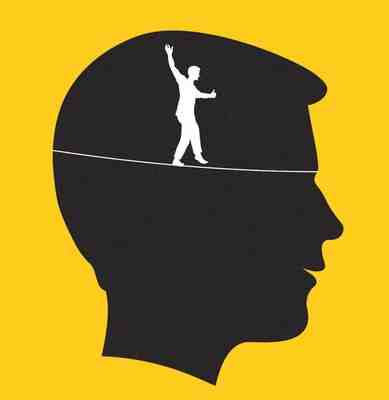
The Confident Mind is the title of a book written by Dr Nate Zinsser the director of West Point’s Performance Psychology Program and published in Jan 2022.
It is described as:
"A complete guide to confidence: how to understand it, how to build it, how to protect it, and how to rely upon it when your performance matters most."
Zinsser believes that confidence is a skill that can be taught, improved, and applied by anyone in any area of life.
This is how he defines it:
How To Build The Confident Mind
Zinsser believes that the confident mind is the result of the deliberate practice of certain thinking skills that will enable you to perform to the peak of your ability and to do so on demand.
The essence of his teaching can be summarised as:
- Consciously build up a memory bank of past successes and keep reviewing and updating it based on daily incremental improvements.
- Develop a routine that enables you to trigger the feeling of peak performance on demand and that gives your conscious mind something to keep it occupied and to stop it impeding your performance.
Fortunately for readers of this site, we have already covered this subject comprehensively in a number of articles on this site and provided extensive free resources.
The foundation of the confident mind
Peak performance is grounded in the Tao practise of Wu Wei which means "doing without doing". This is all about how you take action by being so immersed in profound concentration on what you are doing that you are "in the zone".
The foundation for achieving this state is a high level of unconscious competence in exercising the necessary skills to undertake the required tasks and activities. i.e. to function on auto-pilot.
As a primer and foundation I recommend that you read the following two articles:
The 4 keys to building the confident mind:
[1] Utilising the power of positive expectation - by creating affirmations that will - over time - become a self-fulfilling prophecy i.e. learn how to manage your self talk.
[2] Managing your energetic state - by paying attention to your dominant emotional or energetic state, and uncovering and releasing your resistance.
[3] Building up your mental bank - by associating past successes with the achievement of your goal.
[4] Creating an activation trigger - to kick-start peak performance on demand.
A personal illustration Some years ago I had to do something that every grown up child dreads. I had to deliver the eulogy at my father's funeral on behalf of my mother and sisters and myself.. The idea of facing a hall full of people with my father's coffin right in front of me was overwhelming. But I knew that I had to fulfill this task to the absolute best of ability and deliver a peak performance. I have written in an earlier article about my experiences at the time of my father's death and noted that my father went through the whole of his life with a deep sense of not being good
enough and of never making the grade. With this in mind, I was determined to ensure that the eulogy honoured his memory and paid full tribute to his life so I framed my approach to ensure that I did exactly that. Fortunately, I have extensive experience in speaking to small and medium size groups so the mechanics of the task were not a problem, the challenge was how to make it special and memorable for all those extended family members and friends who would be present. I prepared that speech thoroughly and I rehearsed the finalised script around twenty or thirty times. I recorded my rehearsals in sound and on video over and over again until I had mastered every word, every nuance and inflection of that speech. I would not usually rehearse a speech or talk to this extent, but this time I wanted to build maximum confidence in my delivery. I also did extensive visualisations of myself delivering that speech and feeling confident as I did so. The final piece of my preparation was to utilise an NLP technique, referred to above, as an activation trigger to a peak performance. So how did it go? Well I can humbly say that it was one of the best speeches of my life - maybe the best! I held the audience's attention, I made them sad, I had them roaring with laughter and ended on a reflective and upbeat assessment of my father's positive qualities. And the best thing was that for the whole of the 10 minutes that I was speaking I had the strongest and profoundest sense of my father standing in the wings, to the side of the stage, cheering me on and shouting encouragement! Final thoughts... This whole business of knowing how to achieve peak performance matters enormously. In this short article I have referenced extensive materials and resources that will ensure that you are able to do just that. I want to leave you with one final resource from the late, great John Harricharan. It is simple, easy to use and, over time, very powerful: The Power Pause - Regain Your Balance And Manifest Your Intentions Next Article: 8 Principles For Success Return from: "The Confident Mind" to: Walking The TalkThe Confident Mind In Practice

LATEST ARTICLES


The Kingdom Is Here, Now - Awakening Is Not Later
 What contemplative traditions point to - and how progress quietly replaces presence. Across contemplative traditions, a strikingly consistent message appears: truth is not somewhere else, not in the…
Adult Development Without Becoming Someone Else - Growth Without Identity Upgrade
 You do not grow by becoming someone else - you grow by placing authority where choice becomes possible. So much of what is written and taught about personal growth quietly assumes an identity upgrade…
Belief and Thought: What Zen Tools Works With - What It Leaves Alone
 A Clarification Of Scope Within Zen Tools - Not A Position On Belief As soon as people begin to notice their own thinking more clearly, questions about belief and thought naturally follow: - If though…
How Thought Becomes Identity - The Hidden Mechanism Behind Overthinking, Self-Worth, and Inner Conflict
 Thought Is an Event, Not a Self Most people believe identity is something they have - a stable sense of who they are. In reality, identity is something the mind is continuously producing. It is not fo…
When the Brain Is Hijacked - Where Does Choice Sit?"
 Pressure, the Hijacked Brain, and the Question of Authority
When the brain is hijacked, people are often told they have “lost control”.That language is understandable - and misleading. In reality, man…
Pressure, the Hijacked Brain, and the Question of Authority
When the brain is hijacked, people are often told they have “lost control”.That language is understandable - and misleading. In reality, man…Reduce Digital Overthinking To Lower Your Constant Inner Noise
 Why Constant Micro-Stimulation Increases Your Internal Noise. Modern digital life generates a level of mental activity that previous generations never had to deal with, and this is fundamentally why w…
Pausing Before You Act - Make It a Meta-Habit
 How A Tiny Moment Unlocks Clarity, Choice, And Self-Leadership. There is a moment in life so subtle you barely register it. A colleague questions your idea. A notification flashes. A moment of uncerta…
How to Interrupt Emotional Spirals Using Thought-Awareness
 The spiral is fueled by your mind believing the story your thoughts tell. No one sets out to be swept away by a surge of emotion. One second you’re handling life, and the next, your mind has broken in…
Universal Awareness and the Machinery of Thought
 You Can’t Control Thoughts - But You Can Learn To See Them. Why do our thoughts have so much power over us - and how do we reclaim clarity? The foundation of thought-awareness is the ability to see yo…
Rewiring Your Autopilot – How To Harness Your Subconscious Mind
 How to harness your subconscious mind and move from passenger to pilot. The case for rewiring your autopilot is that most of what drives your thoughts, reactions, and decisions happens below your cons…
Why You Need To Be Intimate With Your Own Thinking
 How self-awareness and insight transforms delusion into wisdom. We live inside an invisible weather system - one made not of clouds and wind, but of thoughts - and this invisibilty is why you need to…
The Illusion of Closeness in Always-On Relationships
 Closeness that cannot survive absence was never intimacy - only constant stimulation mistaken for connection. We live inside an unprecedented experiment in human connection. For the first time in hist…