How To Have A Growth Mindset
5 Tips For Developing A Growth Mindset
How To Be There When Preparation Meets Opportunity
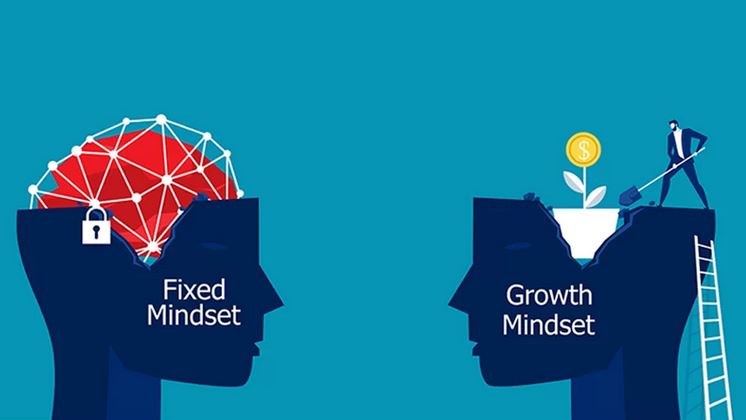
What Is A Growth Mindset?
What do we mean by a growth mindset?
The phrase was coined by psychologist Carol Dwek who has undertaken extensive research to show that we approach life through one of two core sets of beliefs: a fixed mindset or a growth mindset.
The fixed mindset holds the core belief that your personality and intelligence is a fixed, deep-seated and unchangeable trait - you are what you are and cope with life as best you can within the limitations of that trait.
"If you have only a certain amount of intelligence, a certain personality, and a certain moral character— well, then you’d better prove that you have a healthy dose of them. It simply wouldn’t do to look or feel deficient in these most basic characteristics.
I’ve seen so many people with this one consuming goal of proving
themselves— in the classroom, in their careers, and in their
relationships. Every situation calls for a confirmation of their
intelligence, personality, or character. Every situation is evaluated:
Will I succeed or fail? Will I look smart or dumb? Will I be accepted or
rejected? Will I feel like a winner or a loser?" [Dwek]
The growth mindset holds the core belief that your intelligence and personality is something you can develop and that you can expand and grow.
This growth mindset is based on the belief that your basic qualities are things you can cultivate through your efforts.
The passion for stretching yourself and sticking to it, even (or especially) when it’s not going well, is the hallmark of the growth mindset.
This is the mindset that allows people to thrive during some of the most challenging times in their lives." [Dweck]
What Determines Your Mindset?
In my experience there are 2 key determinants of your mindset:
[1] Your hidden beliefs that were installed by your primary care-givers when you were a child.

Many parents and care-givers praise [or denigrate] a child for her traits and attributes.
"You're so clever!"
"You're so good at....."
A parental focus on what you are leads to a fixed mindset
The key point is that the focus of praise is on what you are [or are not].
The effect of this is to create a fixed mindset defining a view of yourself that you will feel compelled to defend over and over again, and that will cause you to avoid challengers where you feel you may fail.
Why?
"Because this is who I am!"
When I was about 7 years old I made my mother a toast rack as a Mother's Day present. I was proud of it and so happy when I presented it to my mother. Unfortunately I made it with balsa wood and of course it broke. My father laughed at me and said that I was no good at practical things.
The mindset that I am not practical, and the shame that accompanied it, stuck with me for 20 years until I got married and we bought our first property. The kitchen needed refurbishing and I determined to do all the work myself.
I remember saying to myself:
"I am not going to go though the rest of my life believing that I can't do practical things because of something that was instilled in me as a child. I will not be defined by that limiting belief..."
I refurbished that kitchen and made a good job of it!
A parental focus on how you do things leads to a growth mindset
Some parents and care-givers praise for process such as the efforts and strategies that were employed.
By focusing on the process rather than the outcome, adults can help kids understand that their efforts, hard work, and dedication can lead to change, learning, and growth both now and in the future.
The effect of this is to create a growth or expansive mindset, a mentality of experimentation and learning, a preparedness to face challenges and persist in the face of failure.
Why?
"Because this is what I do!"
We are brought up to believe that the beliefs that were instilled in us when we were young should be regarded as immutable certainties, and it is these beliefs that form your mindset.
That's fine if your mindset works for you, but what if it doesn't?
What if you come to realise that it inhibits you and limits your growth and development?
Can you entertain the idea that beliefs are there to serve a purpose and can be released when that purpose is served?
Here is how to challenge and change your beliefs.
[2] How you frame things.

Framing is about how you define the sense and meaning of situation.
How you mentally characterize a situation has a profound impact on how you respond to it emotionally.
What determines how you characterize a situation will be largely determined by the self talk, the inner voices
and scripts, that run in the background of your mind and that have a high degree of control over what you think, say and do.
It can be very unsettling to discover, as I did a few years ago, that despite doing lots of work on yourself, and getting involved in personal development and self improvement activities, that there are often still deeply buried beliefs expressed in unconscious self talk that still have a significant influence over your choices.
Follow your resistance
The very best clue that you have some unhelpful and unresourceful
self-talk going on inside your head and outside your conscious awareness
is to look closely at your resistance to things.
Think of something that you want to have, do or be. Why don’t you have it? If you say anything other than honest “I know it’s on the way to me” you probably aren’t clear inside with what you want.
A sobering realisation
In the course of undertaking a goal setting exercise some years ago, I was amazed to discover that I had a quite deep resistance to the idea of achieving financial success easily, and I also had a deep resistance to the idea that anyone actually listens to me.
I have been involved in personal development for many years, so this was a sobering realisation that there were still deep seated areas of resistance in me and that were whispering deeply corrosive and damaging self talk within me.
Change comes from within
This hidden resistance is also known as your immunity to change and it reflects the conditioning that you experienced from your parents and primary care givers that was intended to help build you up and protect you from the negative impacts of personal change such as disappointment and shame.
Think of this as your inbuilt "emotional immune system" trying to protect you.
Here are some simple but powerful techniques and resources to help you change your limiting hidden beliefs.
5 Tips For Developing A Growth Mindset
[1] Change your beliefs & change your attitudes
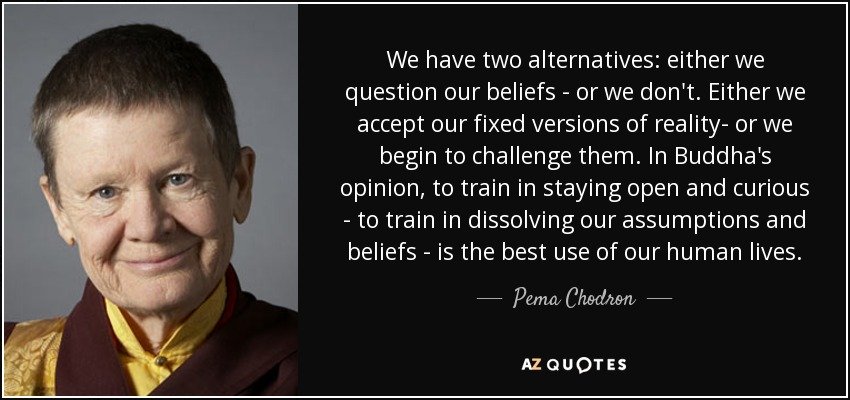
We have already discussed this point in some depth above. To recap, your beliefs are the hidden software in your head that will determine how you see life, how you interpret your experiences, the choices that you make and the decisions that you take.
Here is: how to challenge and change your beliefs.
[2] Deal with your ego by keeping it busy

There are a number of ego traps that can work against a growth mindset, here are 2 big ones:
- The ego in each of us craves attention and this often manifests with a desire to be in the limelight and a desire for longevity!
- The ego doesn't want to admit weakness or risk failure so it puts up a “perfectionism” roadblock by raising the finishing requirements.
In my experience I have found the best way of dealing with my ego is not to fight it but to keep it busy by:
- Focusing on the process not the goal
- Focusing on the daily routine that will lead to the long term goal
- Focusing on short-term immediate tasks
- Measuring these small steps in the process to provide rapid feedback
In short, keep it busy!
[3] Work with your hard wiring
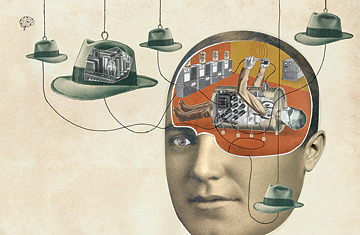
You are walking around with the same hardware as your Paleolithic ancestors. We have inbuilt tendencies:
- To seek instant gratification and to avoid deferred gratification.
- To look for the simplest and quickest solution which means that our default position is to reason by analogy and to see cause-and-effect where there is none.
- To a wide range of cognitive biases
There are 2 keys to this.
- Be aware of your inbuilt tendencies
- Develop your thinking skills
[4] Change your habits
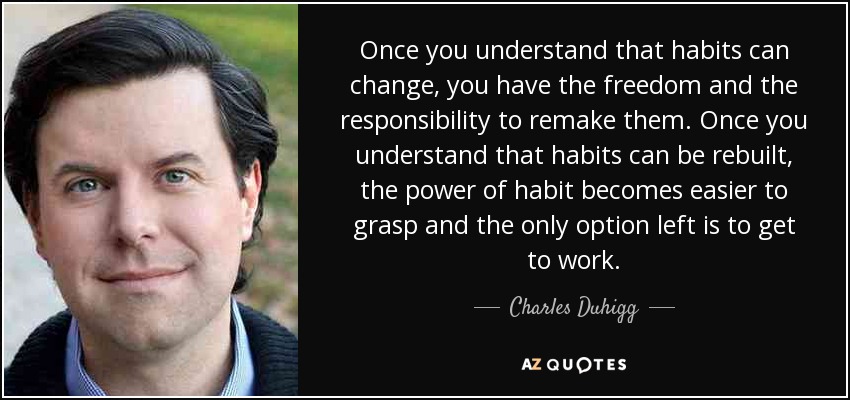
A growth mindset based on tiny changes to your habits can deliver remarkable results, over time.
- “Success is the product of daily habits - not once-in-a-lifetime transformations.”
- "Success is not a goal to reach or a finish line to cross, it is a system to improve, an endless process to refine."
- “If you want to predict where you’ll end up in life, all you have to do is follow the curve of tiny gains or tiny losses, and see how your daily choices will compound ten or twenty years down the line.” [James Clear]
Success is the product of daily habits - not once-in-a-lifetime transformations.
Learn how to apply atomic habits that when practiced regularly will yield incredible results through the power of compound growth.
[5] Dealing with your relationship with failure
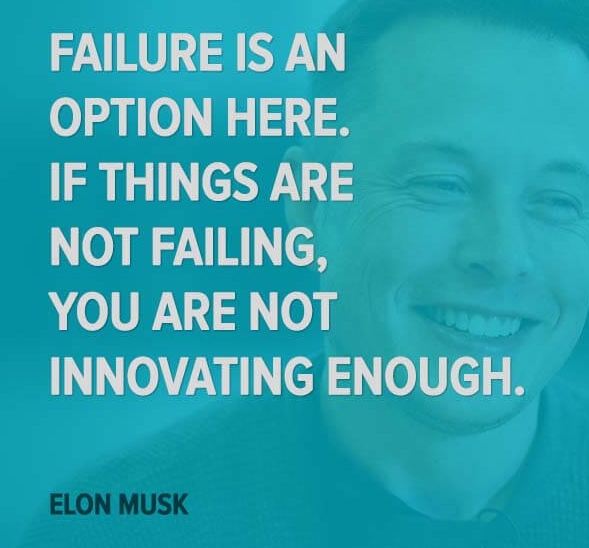
Success is the exception rather than the rule. Life itself is driven by failure.
- The notion that you might fail can really slow you down.
- Just because you have a spectacular failure doesn’t mean the game is over.
- But it’s not the failure itself that’s the problem.
- The problem is your relationship with failure.
A good failure is a powerful learning experience.
Learn and apply why embracing failure is the better option.
Further Reading:
Top 7 Mastery Principles to Building a Business
Next Article:
Lost For Words? Experience Truth
Return from "Growth Mindset" to:
Inner Mastery For Outer Impact or Walking The Talk

LATEST ARTICLES


Adult Development Without Becoming Someone Else - Growth Without Identity Upgrade
 You do not grow by becoming someone else - you grow by placing authority where choice becomes possible. So much of what is written and taught about personal growth quietly assumes an identity upgrade…
Belief and Thought: What Zen Tools Works With - What It Leaves Alone
 A Clarification Of Scope Within Zen Tools - Not A Position On Belief As soon as people begin to notice their own thinking more clearly, questions about belief and thought naturally follow: - If though…
How Thought Becomes Identity - The Hidden Mechanism Behind Overthinking, Self-Worth, and Inner Conflict
 Thought Is an Event, Not a Self Most people believe identity is something they have - a stable sense of who they are. In reality, identity is something the mind is continuously producing. It is not fo…
When the Brain Is Hijacked - Where Does Choice Sit?"
 Pressure, the Hijacked Brain, and the Question of Authority
When the brain is hijacked, people are often told they have “lost control”.That language is understandable - and misleading. In reality, man…
Pressure, the Hijacked Brain, and the Question of Authority
When the brain is hijacked, people are often told they have “lost control”.That language is understandable - and misleading. In reality, man…Reduce Digital Overthinking To Lower Your Constant Inner Noise
 Why Constant Micro-Stimulation Increases Your Internal Noise. Modern digital life generates a level of mental activity that previous generations never had to deal with, and this is fundamentally why w…
Pausing Before You Act - Make It a Meta-Habit
 How A Tiny Moment Unlocks Clarity, Choice, And Self-Leadership. There is a moment in life so subtle you barely register it. A colleague questions your idea. A notification flashes. A moment of uncerta…
How to Interrupt Emotional Spirals Using Thought-Awareness
 The spiral is fueled by your mind believing the story your thoughts tell. No one sets out to be swept away by a surge of emotion. One second you’re handling life, and the next, your mind has broken in…
Universal Awareness and the Machinery of Thought
 You Can’t Control Thoughts - But You Can Learn To See Them. Why do our thoughts have so much power over us - and how do we reclaim clarity? The foundation of thought-awareness is the ability to see yo…
Rewiring Your Autopilot – How To Harness Your Subconscious Mind
 How to harness your subconscious mind and move from passenger to pilot. The case for rewiring your autopilot is that most of what drives your thoughts, reactions, and decisions happens below your cons…
Why You Need To Be Intimate With Your Own Thinking
 How self-awareness and insight transforms delusion into wisdom. We live inside an invisible weather system - one made not of clouds and wind, but of thoughts - and this invisibilty is why you need to…
The Illusion of Closeness in Always-On Relationships
 Closeness that cannot survive absence was never intimacy - only constant stimulation mistaken for connection. We live inside an unprecedented experiment in human connection. For the first time in hist…
Why Approval Feels Like Safety And Distance Feels Like Danger
 Safety is not found in being approved - it appears when approval is no longer required. When approval feels like safety, connection stops being something we enjoy and quietly becomes something we rely…