How To Trust The Process Of Mindfulness - Right Now

How To Trust The Process Of Mindfulness
When we talk about how to trust the process of mindfulness the credibilty of the process is heavily dependent on the first-hand experience of people who have already trodden this path before us.
In this short article we are going to draw from their experience in a series of simple practices and reflections.
# The Process = This Present Moment
In mindfulness, the process isn’t some distant goal — it's what is happening right now.
- Breathing in, breathing out.
- Noticing a thought arise.
- Feeling tension in the body.
- Hearing a sound.
# Non-Striving
Mindfulness teaches us that trying to achieve a state — peace, stillness, enlightenment — often gets in the way.
Jon Kabat-Zinn calls this non-striving:
Trusting the process means letting go of the desire to "fix" or "improve" every moment, and instead resting in the unfolding.
# Impermanence and Change
Everything shifts: emotions, sensations, thoughts, moods.
- Pain arises
- Pain passes
- Joy arises
- Joy passes.
# Patience and Faith
In mindfulness practice, sometimes you feel nothing is happening. Or you may feel frustration, boredom, even failure.
Trusting the process means having faith that simply sitting, breathing, noticing - over time - leads to transformation, even if the change is subtle and slow.
As Thich Nhat Hanh might say:
“We don’t need to chase after anything. Everything we need is already here, in this moment.”
In summary:
Mindful Practice, Teaching and Metaphor
Here is a:
- Simple practice to help cultivate this
- Zen teaching on trusting the process
- Metaphor to deepen the understanding.
# Simple Practice: "Letting Be" Meditation

You can do this in just 5–10 minutes.
- Sit comfortably. Feel your body supported by the earth.
- Bring attention to your breath. No need to control it. Just feel it.
- As thoughts, emotions, or body sensations arise, silently say to yourself: “Let it be.”
- You don’t need to analyze, judge, or fix anything. Allow the experience to come and go naturally.
- If you
feel tension or restlessness, acknowledge it gently:
“This too is part of the process.” - Keep returning to breath and presence, with an attitude of patience.
Zen Teaching: The Farmer's Luck

This is an old Zen parable you may have heard,
but it beautifully embodies trusting the process:
- There was once a farmer. One day, his horse
ran away. His neighbor said: “Such bad luck!”
The farmer replied: “Maybe yes, maybe no.” - The next day, the horse returned, bringing
three wild horses with it.
The neighbor said: “Such good luck!”
The farmer replied: “Maybe yes, maybe no.” - Later, the farmer's son tried to ride one of
the wild horses, fell, and broke his leg.
The neighbor said, “Such bad luck!”
The farmer replied, “Maybe yes, maybe no.” - Soon after, soldiers came to the village to
recruit young men for war. Because of his broken leg, the son was spared.
The neighbor said, “Such good luck!”
The farmer replied, “Maybe yes, maybe no.”
Lesson of "The Farmer's Luck":
Metaphor: The Bamboo and the Oak

Imagine two trees in a storm: the strong oak
and the supple bamboo.
- The oak resists, trying to hold firm against the wind. Eventually, its rigid trunk may snap.
- The bamboo bends with the wind, sways, and returns to upright when the storm passes.
All together, these point toward one deep truth in mindfulness:
Mindful Reminder, Reading and Koan

Here is a:
- Daily reminder phrase you can carry
- Deeper reading suggestion
- Short koan practice for contemplation.
A Daily Reminder Phrase
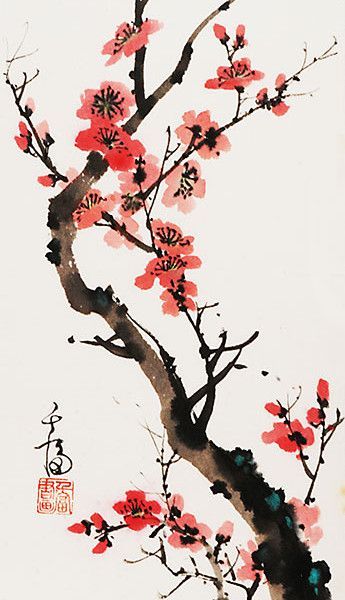
A simple phrase you can silently repeat throughout your day, especially when facing frustration or uncertainty:
“I trust this moment to unfold as it must. I release control, and I am here.”
You can say it when:
- you feel impatient
- you're caught in worry
- you're facing unexpected change
- or even when you're simply breathing.
These quiet reminders gently train the mind to return to trust.
A Deeper Reading Suggestion
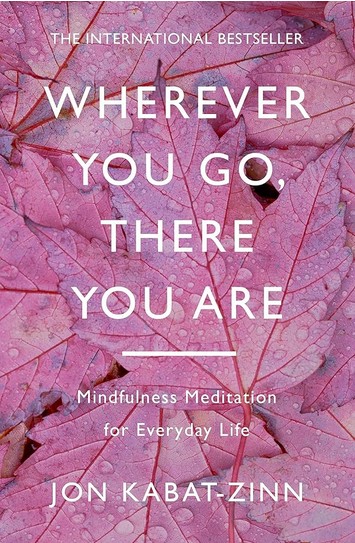
"Wherever You Go, There You Are" — Jon Kabat-Zinn
This is one of the most accessible and profound introductions to mindfulness.
Many chapters touch on trusting the process — especially his teachings on non-doing, patience, and letting be.
Short quote from the book:
“You can’t make a flower grow by pulling on it. You can only give it the conditions to grow and let nature take its course.”
This is exactly the heart of trusting the process.
A Short Koan Practice

Koans are short Zen sayings or stories meant to help loosen our attachment to logical mind and invite insight.
Here’s a simple one:
"Sitting quietly, doing nothing,
Spring comes, and the grass grows by itself."
How to practice with it:
- Sit quietly for a few minutes.
- Gently repeat the koan in your mind.
- Let the words sink in.
- Don't analyze — simply feel the meaning in your body.
- Notice any feelings of relaxation, surrender, or trust that arise.
Over time, this koan can open up layers of insight into what it means to allow life to unfold.
Return from: "How To Trust The Process Of Mindfulness" to: Walking The Talk
Or to: How To Practise Mindfulness
Next Article:
How To Live With Contradiction - Beyond Thought Let Stillness Speak

LATEST ARTICLES


Belief and Thought: What Zen Tools Works With - What It Leaves Alone
 A Clarification Of Scope Within Zen Tools - Not A Position On Belief As soon as people begin to notice their own thinking more clearly, questions about belief and thought naturally follow: - If though…
How Thought Becomes Identity - The Hidden Mechanism Behind Overthinking, Self-Worth, and Inner Conflict
 Thought Is an Event, Not a Self Most people believe identity is something they have - a stable sense of who they are. In reality, identity is something the mind is continuously producing. It is not fo…
When the Brain Is Hijacked - Where Does Choice Sit?"
 Pressure, the Hijacked Brain, and the Question of Authority
When the brain is hijacked, people are often told they have “lost control”.That language is understandable - and misleading. In reality, man…
Pressure, the Hijacked Brain, and the Question of Authority
When the brain is hijacked, people are often told they have “lost control”.That language is understandable - and misleading. In reality, man…Reduce Digital Overthinking To Lower Your Constant Inner Noise
 Why Constant Micro-Stimulation Increases Your Internal Noise. Modern digital life generates a level of mental activity that previous generations never had to deal with, and this is fundamentally why w…
Pausing Before You Act - Make It a Meta-Habit
 How A Tiny Moment Unlocks Clarity, Choice, And Self-Leadership. There is a moment in life so subtle you barely register it. A colleague questions your idea. A notification flashes. A moment of uncerta…
How to Interrupt Emotional Spirals Using Thought-Awareness
 The spiral is fueled by your mind believing the story your thoughts tell. No one sets out to be swept away by a surge of emotion. One second you’re handling life, and the next, your mind has broken in…
Universal Awareness and the Machinery of Thought
 You Can’t Control Thoughts - But You Can Learn To See Them. Why do our thoughts have so much power over us - and how do we reclaim clarity? The foundation of thought-awareness is the ability to see yo…
Rewiring Your Autopilot – How To Harness Your Subconscious Mind
 How to harness your subconscious mind and move from passenger to pilot. The case for rewiring your autopilot is that most of what drives your thoughts, reactions, and decisions happens below your cons…
Why You Need To Be Intimate With Your Own Thinking
 How self-awareness and insight transforms delusion into wisdom. We live inside an invisible weather system - one made not of clouds and wind, but of thoughts - and this invisibilty is why you need to…
The Illusion of Closeness in Always-On Relationships
 Closeness that cannot survive absence was never intimacy - only constant stimulation mistaken for connection. We live inside an unprecedented experiment in human connection. For the first time in hist…
Why Approval Feels Like Safety And Distance Feels Like Danger
 Safety is not found in being approved - it appears when approval is no longer required. When approval feels like safety, connection stops being something we enjoy and quietly becomes something we rely…
You Do Not Need Better Boundaries - You Need Clearer Thought
 What no longer feels like your responsibility no longer crosses your boundaries. This article explains why you don’t need better boundaries - you need clearer thought - how modern life systematically…