Universal Awareness and the Machinery of Thought
You Can’t Control Thoughts - But You Can Learn To See Them
A Zen Tools Perspective Inspired by Emerging Interdisciplinary Research

Universal Awareness is the reliable background clarity that exists beneath your thinking.
It’s the universal human ability to notice thoughts, feelings, and sensations as they arise - without being pulled into them.
Unlike thought, which is fast, interpretive, and often noisy, Universal Awareness is steady and neutral.
Introducing Universal Awareness and the Machinery of Thought

Every so often, a piece of research emerges that isn’t just interesting academically - it offers a fresh lens for examining our own lived experience.
One new theoretical paper proposes a bold idea: that awareness itself may be a foundational property of reality, not a by-product of brain activity.
This is the starting point for a new theoretical model of the nature of reality, presented by Maria Strømme, Professor of Materials Science at Uppsala University.
Whether or not this is ultimately proven, the model is surprisingly useful for understanding one of life’s most practical questions:
Why do our thoughts have so much power over us - and how do we reclaim clarity?
Zen Tools exists to give people mental clarity through thought-awareness:
- Not spirituality,
- Not metaphysics,
- Not belief systems, but practical insight into how your mind creates your experience.
This article draws from the emerging “foundational consciousness” model and translates its insights into something you can use immediately.
No philosophy degree required. No quantum jargon. No mystical interpretations.
Just a simple, workable framework for navigating thought, attention, and the experience of being human.
The Background and the Foreground
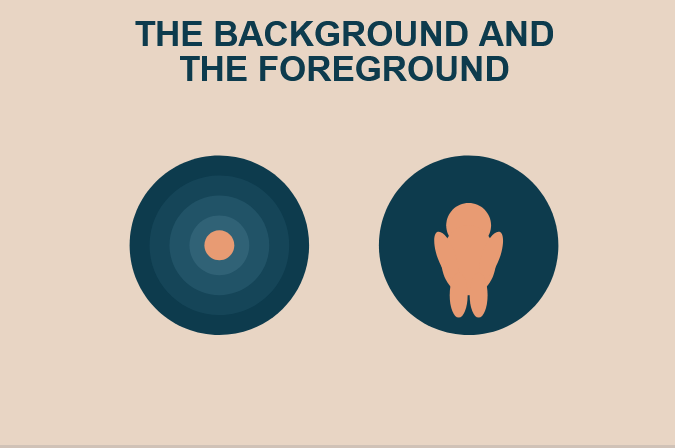
The core idea of the recent research into universal awareness and the machinery of thought is this:
- Awareness is the constant background.
- Thought is the changing foreground.
In the context of your day-to-day life, this is not a new idea. You’ve felt this difference:
- When your mind is calm, you’re aware of your thoughts without being pulled into them.
- When you’re stressed or overwhelmed, thought fills your entire field of experience. You lose the background. Everything feels urgent, personal, and heavy.
The paper simply gives us a clearer conceptual structure for something we already observe:
- Awareness is stable.
- Thought is unstable.
- Confusion comes from mistaking one for the other.
In practical terms:
- Awareness isn’t an achievement.
- It’s the baseline capacity to notice, register, and experience.
- It’s always present beneath the noise.
The Machinery of Thought
One of the most valuable insights from the paper is the idea that thought is not just content - it’s a mechanism.
Thought is the mechanism that creates your moment-to-moment experience.
Most people believe they are “seeing reality”, when in fact they are seeing reality filtered through thought.
Traffic is neutral. The delay is neutral. The slow-moving lorry is neutral.
Your experience of them is built by your:
- interpretations,
- expectations,
- predictions,
- habits,
- emotional associations,
- cognitive shortcuts.
This is the machinery of thought in action.
The key insight for Zen Tools users is this:
The Three Components: Mind, Awareness, Thought
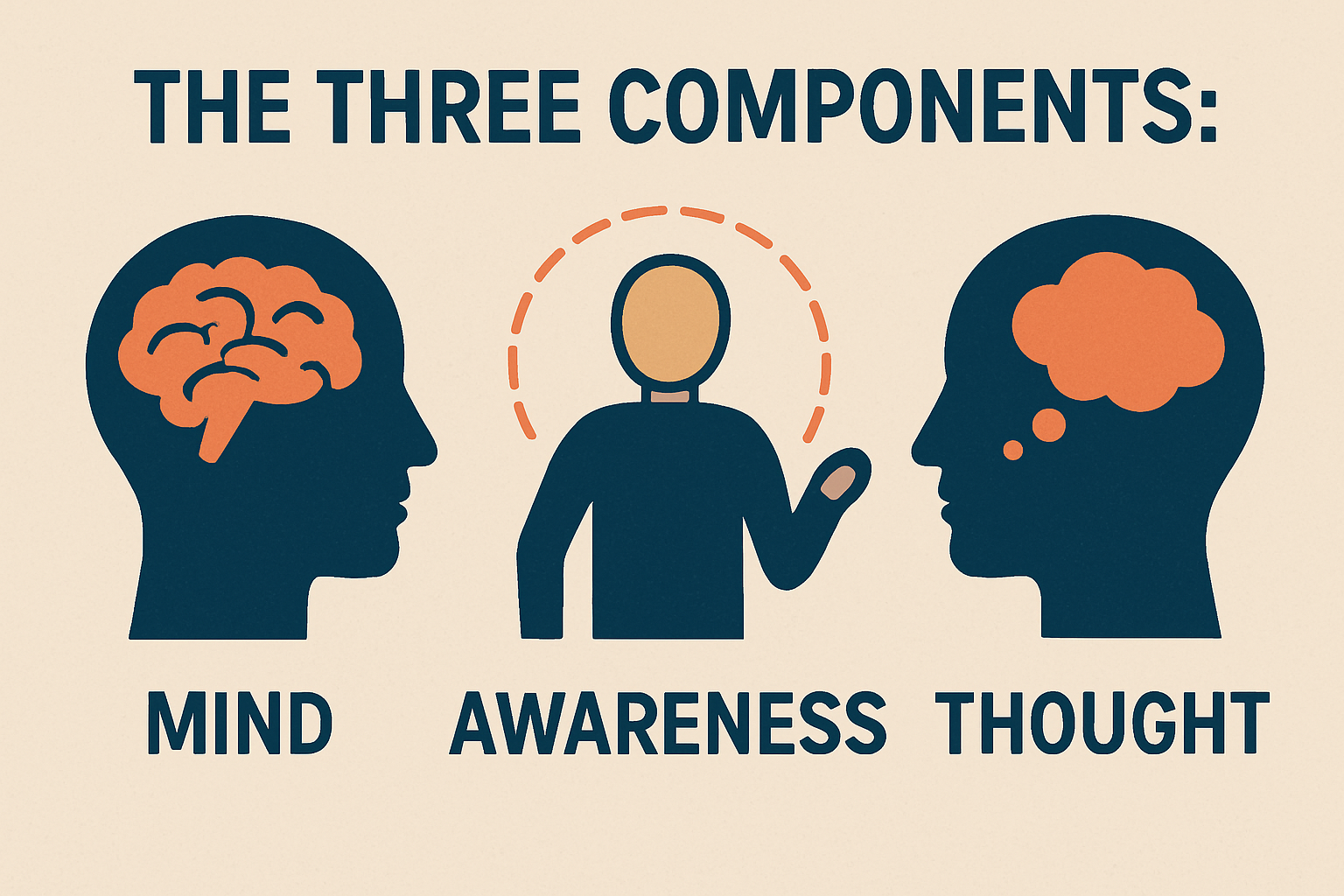
The research into universal awareness and the machinery of thought frames human experience through three components:
- Mind — the potential for clarity, intelligence, and insight - Not the brain, but the deeper capacity for understanding and creativity.
- Awareness — the space in which experience unfolds - The backdrop of consciousness — steady, open, and always available.
- Thought — the machinery that generates form - All interpretations, stories, pressures, opinions, fears, plans, and assumptions.
You can think of it like this:
- Mind = the raw potential
- Awareness = the screen
- Thought = the images on the screen
This is not a metaphysical claim. It’s a working model to help you understand why your internal world behaves the way it does.
In Zen Tools terms:
- Mind is the source of insight.
- Awareness is the home of clarity.
- Thought is the machinery we learn to observe.
Identifying With Thought vs. Observing Thought
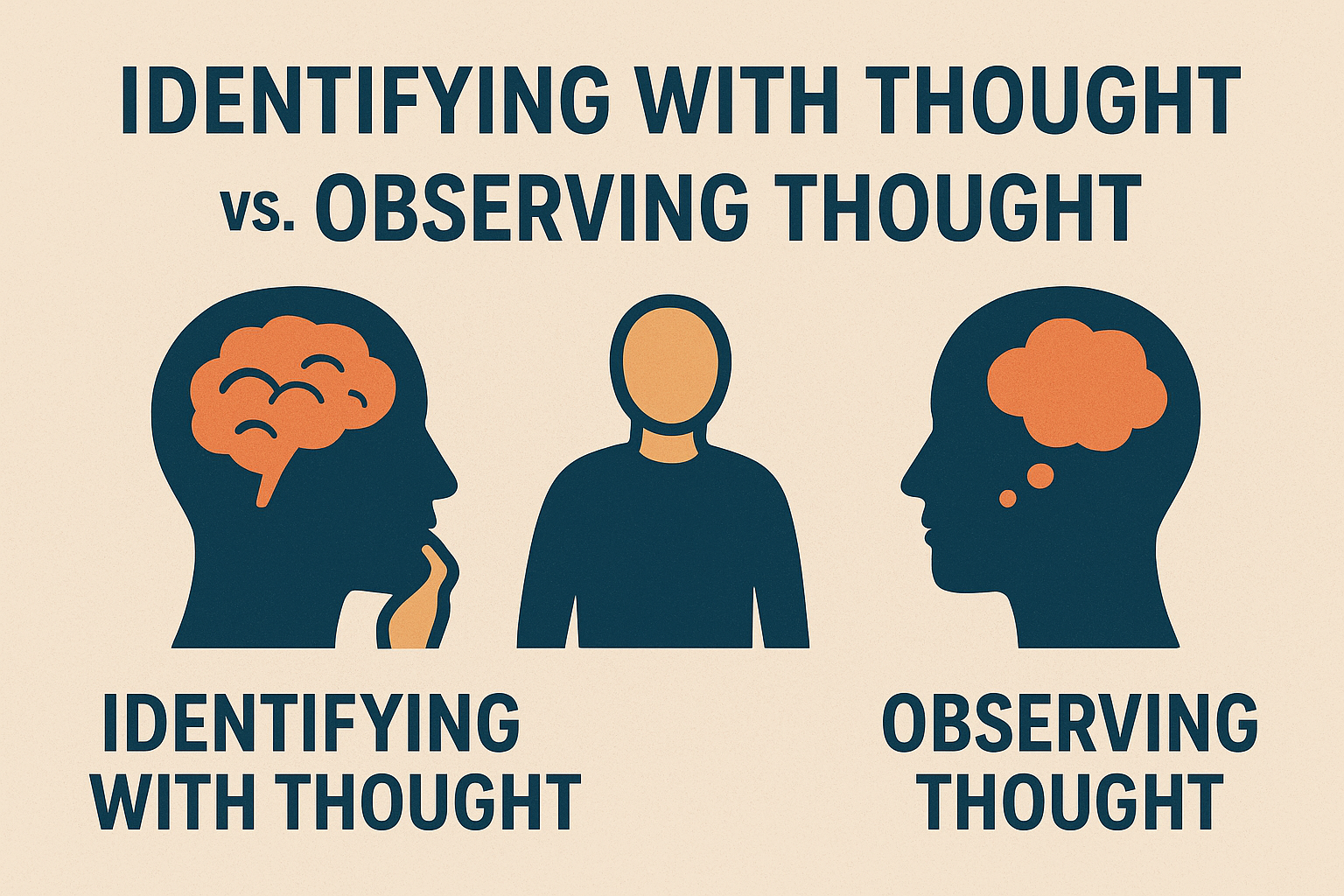
The paper’s most practical contribution is the distinction between identification and observation.
Identification
This is when thought and awareness collapse into each other.
You don’t “have” thoughts — you become the thought.
- “This is unbearable.”
- “I’m behind.”
- “This shouldn’t be happening.”
- “I can’t handle this.”
In identification, thought dictates your emotional state, your perception, and your behaviour.
Observation
This is the ability to see thought as an event within awareness.
You recognise:
- “This is a thought.”
- “This is interpretation, not reality.”
- “This is a mental movement, not a fact.”
Observation doesn’t require techniques, breathing exercises, or discipline. It requires perspective — the ability to step back into the background.
The key Zen Tools insight:
The Illusion of Separation
Another idea from the paper — interpreted in a practical, non-spiritual way — is that much of our suffering comes from the illusion of separateness.
Not metaphysical separation. But psychological separation created by thought.
Thought divides experience into:
- me vs. them
- success vs. failure
- right now vs. where I “should” be
- my plan vs. the world’s plan
- my expectations vs. reality
This is not a philosophical argument. It’s a behavioural observation:
The more divided your internal world becomes, the more friction you feel.
Traffic isn’t stressful because of the traffic. It’s stressful because it violates the “separate personal plan” that thought constructed.
Your phone isn’t overwhelming because of notifications. It’s overwhelming because thought creates:
- urgency,
- obligation,
- pressure,
- imagined consequences.
Why This Matters In Real Life
This model is not about quantum physics or metaphysics. It is about practical clarity in daily moments.
Here’s why it matters:
# You stop fighting your own mind
When you understand that thought is a mechanism, not a flaw, you stop trying to control it, suppress it, or “fix” it. You learn to observe.
# Your emotional volatility drops rapidly
Emotions follow thought. Shift your relationship with thought, and your emotional experience stabilises.
# Overthinking reduces naturally
When you stop giving every thought authority, the system quietens by itself.
# You make better decisions
Clear decisions emerge from the background, not the noise. Once you can see the machinery, you stop reacting and start choosing.
# You gain cognitive agility
You move more fluidly between ideas, perspectives, and interpretations.
This is the practical power of the awareness–thought distinction.
Applying the Model to Daily Situations
Let’s bring this into real contexts.
A. Traffic or queues
Old pattern: frustration → pressure → irritability
New pattern:
- awareness notices the thought “this is wasting my time”
- you recognise it as thought, not truth
- clarity reappears almost immediately
B. Phone overwhelm
Old pattern: notification → stress → reactivity
New pattern:
- you notice the speed of the thought cascade
- you pause for a moment
- you step back into the background of awareness
- your clarity returns before you respond
C. Social interactions
Old pattern: assumptions → interpretations → anxiety
New pattern:
- you see the machinery creating the assumptions
- you step back
- you respond with presence rather than projection
The Background Shift
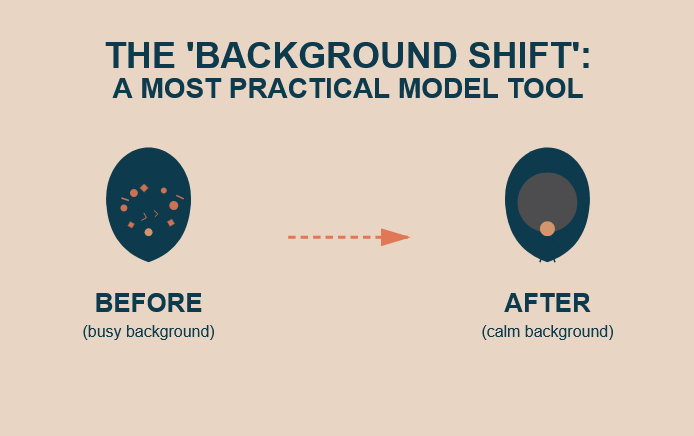
One of the simplest and most effective techniques arising from this model is what we call the "Background Shift".
Step 1: Notice the thought
Example: “This is too much.”
Step 2: Recognise it as foreground
A mental event, not a definition of reality.
Step 3: Move attention back to the background
The Value and Limitations of This Model
Zen Tools is grounded, practical, and non-dogmatic. So it’s important to be clear about this model:
Value
- It provides a clean, non-spiritual explanation for awareness.
- It reinforces our central teaching: you experience your thoughts, not reality.
- It highlights the difference between being in the noise and stepping into the background.
- It supports the practice of observing thought without resistance.
Limitations
- The model is theoretical, not proven.
- It should be used as a metaphor and a framework, not a belief.
- The value lies in its practical application, not its scientific accuracy.
Action Points
Points for Reflection
- Where in your daily life does the machinery of thought take over?
- Look at recurring situations — work pressure, phone use, delays, relationships.
- Can you distinguish awareness (background) from thought (foreground)?
- Even once a day is enough to change your perspective.
- What thoughts feel “true” simply because they are loud?
- Volume is not truth. Speed is not truth. Familiarity is not truth.
- Do you treat thoughts as commands, predictions, or possibilities?
- Each creates a different emotional world.
- How often do you notice thought in real time — not as a judgement afterwards?
- This is the beginning of real clarity.
Points for Action
- Use the Background Shift once today
- When you notice an uncomfortable thought, pause for one second and shift attention to the awareness behind it.
- Label one thought per day as “foreground”
- This weakens the automatic identification with thought.
- Practice one moment of “noticing” in a stressful situation
- Traffic, queues, emails — use whatever shows up.
- Ask the question: “What is here before the thought?”
- This resets perspective quickly and cleanly.
- Choose one habit to observe for a week
- Phone use, multitasking, reactivity — watch how the machinery operates.
- Write down one insight you notice about thought this week
- Insights compound. One small shift builds into substantial clarity.
Recommended Further Reading
- You Are Not Your Thoughts
- Rewiring Your Autopilot – How To Harness Your Subconscious Mind
- Universal Awareness and the Machinery of Thought
- The Wise Advocate
- The Battle for Your Mind
- Why You Need to Be Intimate with Your Own Thinking
- I Do Not Feel Like It
Return from: "Universal Awareness" to: You Are Not Your Thoughts or Inner Mastery For Outer Impact
Next Article: Rewiring Your Autopilot – How To Harness Your Subconscious Mind

LATEST ARTICLES


Belief and Thought: What Zen Tools Works With - What It Leaves Alone
 A Clarification Of Scope Within Zen Tools - Not A Position On Belief As soon as people begin to notice their own thinking more clearly, questions about belief and thought naturally follow: - If though…
How Thought Becomes Identity - The Hidden Mechanism Behind Overthinking, Self-Worth, and Inner Conflict
 Thought Is an Event, Not a Self Most people believe identity is something they have - a stable sense of who they are. In reality, identity is something the mind is continuously producing. It is not fo…
When the Brain Is Hijacked - Where Does Choice Sit?"
 Pressure, the Hijacked Brain, and the Question of Authority
When the brain is hijacked, people are often told they have “lost control”.That language is understandable - and misleading. In reality, man…
Pressure, the Hijacked Brain, and the Question of Authority
When the brain is hijacked, people are often told they have “lost control”.That language is understandable - and misleading. In reality, man…Reduce Digital Overthinking To Lower Your Constant Inner Noise
 Why Constant Micro-Stimulation Increases Your Internal Noise. Modern digital life generates a level of mental activity that previous generations never had to deal with, and this is fundamentally why w…
Pausing Before You Act - Make It a Meta-Habit
 How A Tiny Moment Unlocks Clarity, Choice, And Self-Leadership. There is a moment in life so subtle you barely register it. A colleague questions your idea. A notification flashes. A moment of uncerta…
How to Interrupt Emotional Spirals Using Thought-Awareness
 The spiral is fueled by your mind believing the story your thoughts tell. No one sets out to be swept away by a surge of emotion. One second you’re handling life, and the next, your mind has broken in…
Universal Awareness and the Machinery of Thought
 You Can’t Control Thoughts - But You Can Learn To See Them. Why do our thoughts have so much power over us - and how do we reclaim clarity? The foundation of thought-awareness is the ability to see yo…
Rewiring Your Autopilot – How To Harness Your Subconscious Mind
 How to harness your subconscious mind and move from passenger to pilot. The case for rewiring your autopilot is that most of what drives your thoughts, reactions, and decisions happens below your cons…
Why You Need To Be Intimate With Your Own Thinking
 How self-awareness and insight transforms delusion into wisdom. We live inside an invisible weather system - one made not of clouds and wind, but of thoughts - and this invisibilty is why you need to…
The Illusion of Closeness in Always-On Relationships
 Closeness that cannot survive absence was never intimacy - only constant stimulation mistaken for connection. We live inside an unprecedented experiment in human connection. For the first time in hist…
Why Approval Feels Like Safety And Distance Feels Like Danger
 Safety is not found in being approved - it appears when approval is no longer required. When approval feels like safety, connection stops being something we enjoy and quietly becomes something we rely…
You Do Not Need Better Boundaries - You Need Clearer Thought
 What no longer feels like your responsibility no longer crosses your boundaries. This article explains why you don’t need better boundaries - you need clearer thought - how modern life systematically…