Reduce Digital Overthinking To Lower Your Constant Inner Noise
Why Constant Micro-Stimulation Increases Your Internal Noise
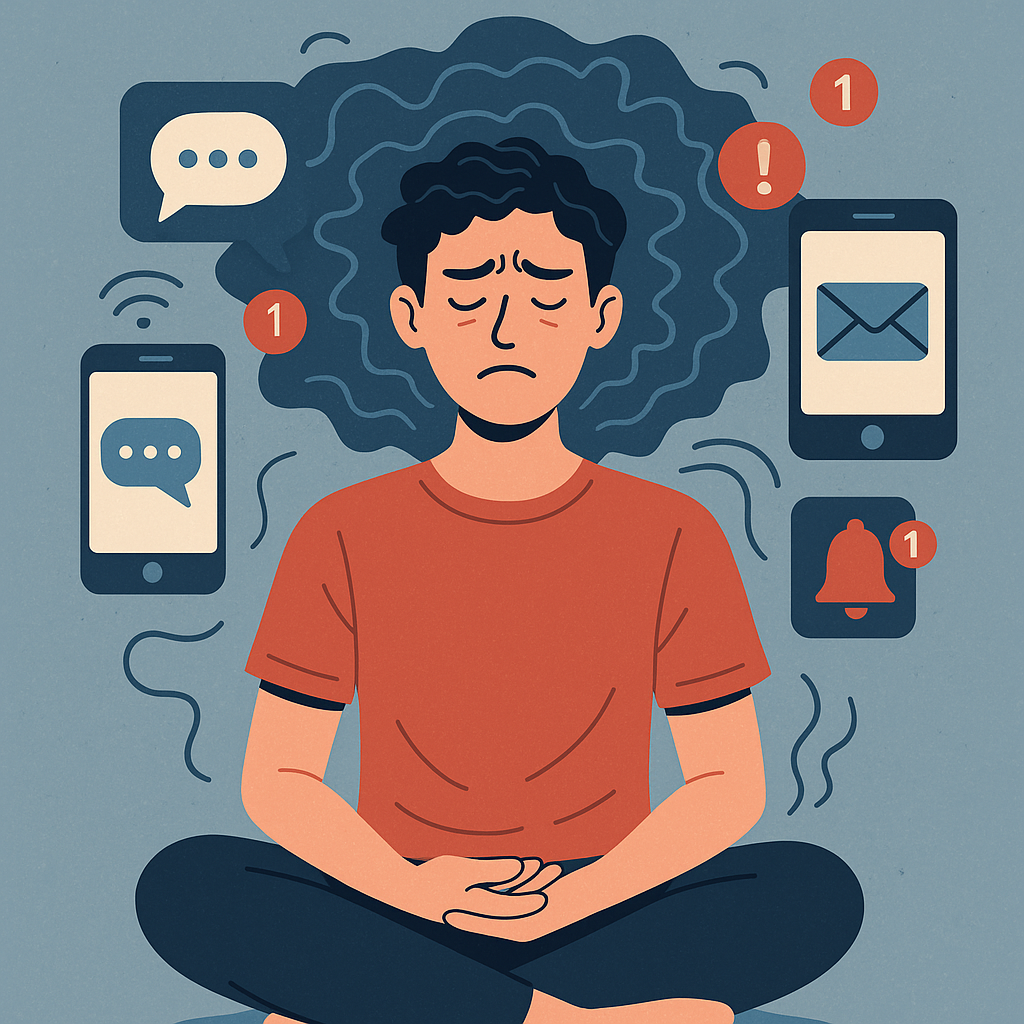
Why We Need To Reduce Digital Overthinking
Modern digital life generates a level of mental activity that previous generations never had to deal with, and this is fundamentally why we need to look at ways to reduce overthinking.
What appears on the surface to be a simple stream of notifications, quick checks, and background digital noise is actually something far more impactful: a system that trains your mind to operate in a state of continuous reactivity.
This article explores why constant micro-stimulation, which are the tiny digital pulls on your attention, significantly increases internal noise.
We will look at the neurological mechanics behind it, how it feeds overthinking, and what you can do today to reduce digital overthinking and reclaim clarity.
What Is Digital Overthinking?
Digital overthinking isn’t about thinking too much about technology. It’s the excess cognitive activity triggered by digital stimulation.
Every time you check your phone, glance at your inbox, respond to a ping, or swipe to refresh a feed, you’re introducing a small input. One input is harmless. But in the real world, it’s rarely one.
Digital overthinking is the accumulation of these interruptions.
It shows up as:
- A noisy, restless mind
- Difficulty concentrating
- A constant “background hum” of thought
- A sense of being mentally full even before the day starts
- A feeling that you’re always behind, or missing something
- Low-level anxiety triggered by notifications or silence between them
Digital overthinking does not feel dramatic. It feels ordinary - which is exactly why it’s so pervasive.
Why Micro-Stimulation Matters More Than Big Distractions

Most people assume mental overload comes from “big” interruptions such as a crisis, a stressful email, a demanding project.
But the brain actually handles large, infrequent events relatively well.
What it struggles with is frequent, low-intensity stimulation. This is because of how human attention and working memory operate.
Each time you receive a digital stimulus — even a tiny one - your brain must:
- Register the signal
- Shift attention toward it
- Evaluate whether it’s important
- Decide whether to act
- Return to the previous task
This happens in fractions of seconds, but the cost accumulates.
Neurological research shows that context switching increase levels of cognitive fatigue and reduces the depth of thinking available for complex tasks.
A single notification is not the problem. But fifty micro-interruptions per hour fundamentally reshape your mental environment.
Micro-stimulation is “always on” stimulation
The difference between macro and micro stimulation is simple:
- A major interruption breaks your focus once.
- Micro-stimulation prevents focus from forming in the first place.
How Micro-Stimulation Increases Internal Noise
To understand why digital life makes your mind noisier, we need to look briefly at how the brain handles attention, reward, and prediction.
[1] The Dopamine Loop
How technology trains your brain to chase stimuli
Every notification or new piece of information triggers a small dopamine release. This does not produce pleasure; instead, it produces anticipation.
Dopamine reinforces behaviours linked to checking, refreshing, and scanning for updates.
Over time, this conditions the brain to seek micro-stimulation, making quiet moments feel uncomfortable.
Example:
You reach for your phone at a red light, in a queue, or during a slow moment — not because you need information, but because your brain is conditioned to reduce the discomfort of “nothing happening.”
This craving for stimulation generates internal noise even before the phone comes out.
[2] The Salience Network
How notifications are treated as important
Your brain has a system called the salience network, designed to detect important signals - threats, opportunities, or changes in your environment. Digital notifications exploit this.
A vibration or ping is neurologically processed in the same initial pathway as any alert that might require action. Even when it’s trivial, it triggers a rapid reorientation of attention.
This constant activation increases mental tension and produces internal commentary such as:
- “Should I check that?”
- “What if it’s important?”
- “I’ll look quickly, just in case.”
The noise begins before the action. Micro-stimulation fuels micro-thoughts.
[3] The Working Memory Bottleneck
How attention fragmentation creates thought overload.
Working memory - your mental “holding space” is extremely limited. Most people can only actively hold a few pieces of information at once.
Micro-stimulation repeatedly pushes new fragments into working memory:
A message preview, a headline, an unfinished thread of thought, a half-read post.
Example:
You check a message while writing an email. The message triggers a new line of thinking. Now your brain is holding the:
- Unfinished email
- Content of the message
- Emotional reaction
- Plan to respond later
- Thought of not forgetting that plan
By the time you return to the original task, your cognitive load has doubled.
Multiply this by dozens of interactions per hour and your working memory becomes congested.
This congestion is experienced subjectively as internal noise
Why A Noisy Mind Overthinks

Overthinking is not caused by “thinking too much,” but by reactive thinking becoming the default mode. Micro-stimulation pushes the brain into that reactive mode. Here’s the cycle: This is how digital environments train the mind to keep thinking, even when nothing is happening.
Example: The Morning Scan
Many people wake up and check their phone immediately. This simple action introduces:
- Social input
- News input
- Work input
- Notifications
- Unexpected items needing attention
Within 60 seconds, your brain has been exposed to a full spectrum of stimuli. You haven’t even stood up, but your mind is already processing, predicting, categorising, and worrying.
By 8:10am, you’ve already begun overthinking - not because the day is stressful, but because you started in a state of cognitive agitation.
Example: Background noise at work
You sit down to focus. A message arrives. You ignore it - or think you do.
But your brain has already:
- Registered it
- Opened an internal loop (“I must check that later”)
- Created anticipatory tension
- Split your attention
Even without touching the phone, the noise level rises. This is why it feels harder to think deeply in digital environments. The mind is continually forced into shallow, scattered activity.
How Micro-Stimulation Disrupts Internal Silence
Humans need natural pauses for the mind to settle. These pauses allow:
- Emotional integration
- Clearer thinking
- Lower baseline anxiety
- Deeper problem solving
- Mental restoration
Micro-stimulation eliminates these pauses. Any moment of potential quiet is filled with digital checking.
Example:
Waiting for the kettle to boil used to be a short moment of mental rest.
Now it becomes an opportunity for stimulation.
You may only check for 10 seconds — but the mental cost extends far beyond that moment.
Micro-stimulation creates micro-tension
- Even the potential for a notification creates a baseline alertness.
- This micro-tension prevents the mind from reaching a settled resting state.
- When the mind cannot rest, it fills the space with thought noise.
- This is not a character flaw.
- It is a predictable neurological response.
The Cost Of Digital Overthinking: Reduced Clarity, Reduced Capacity, Reduced Wellbeing

When internal noise increases, clarity decreases.
When clarity decreases, overthinking fills the gaps.
Over time, this leads to:
- Mental exhaustion
- Procrastination
- FOMO-driven checking
- Poor decision-making
- Reduced creativity
- An inability to sustain deep thinking
- A constant feeling of internal friction
Many people misinterpret these symptoms as personal weakness.
In reality, they are the expected result of a mind exposed to thousands of digital micro-stimuli per day.
How to Reduce Digital Overthinking [Without Abandoning Technology]

You don’t need to disconnect from the world.
You do need to reduce digital overthinking by cutting down unnecessary micro-stimulation and creating space for your mind to settle.
Here are five practical, actionable strategies that will enable you to reduce digital overthinking.
1. Reduce Unnecessary Inputs
# Turn off non-essential notifications
Every notification is a potential thought trigger.
Removing them reduces reactive thinking by default.
Examples of notifications to disable:
- Social media badges
- Promotional email
- App updates
- News alerts
- Group chat alerts (except essential ones)
# Use “batch checking” instead of “micro checking”
Set defined windows for checking:
- Email at 10am and 4pm
- Messages at the top of each hour
- Social feeds once in the evening
This changes the structure of your attention, reducing the number of mental resets across the day.
# Put your phone outside visual range during work
Visual triggers are neurological triggers. If your phone is in view, your mind anticipates stimulation.
Moving it physically away reduces internal noise even if nothing else changes.
_____________________________
2. Restore Natural Pauses
# Reclaim the micro-moments
Choose one daily activity where you intentionally avoid your phone:
- Commuting
- Boiling the kettle
- Eating lunch
- Waiting in a queue
- Bathroom breaks
These small moments of quiet dramatically reduce cognitive tension.
# Use “single-focus” mode throughout the day
When doing one task, close all unrelated tabs and apps.
Make the visual environment match your intention.
This reduces overstimulation of the salience network.
_____________________________
3. Retrain the Mind’s Relationship With Stimulation
# Notice the moment of impulsive checking
When you feel the urge to check your phone, pause for three seconds.
This tiny window restores conscious choice instead of conditioned behaviour.
You don’t need to resist the urge every time. Simply noticing it breaks the automatic loop.
# Create short recovery windows
Twice a day, take 30 seconds to:
- Put the phone face-down
- Relax your attention
- Allow the mind to settle
This is not meditation. It is a neurological reset.
_____________________________
4. Simplify Digital Environments
# Remove visual clutter
Your home screen should contain only essential apps. Everything else goes into folders.
Fewer icons = fewer thought triggers.
# Use flight mode strategically
During focused work or rest periods, flight mode stops micro-stimulation at the source.
Start with 10–15 minutes and increase as needed.
_____________________________
5. Strengthen Internal Awareness
# Notice cause and effect
Throughout your day, observe:
- What happens in your mind after a notification
- How your attention shifts after a quick check
- The difference in mental clarity when your phone is away
- How your baseline tension changes with fewer inputs
The Core Principle: Less Input, Lower Noise, More Clarity
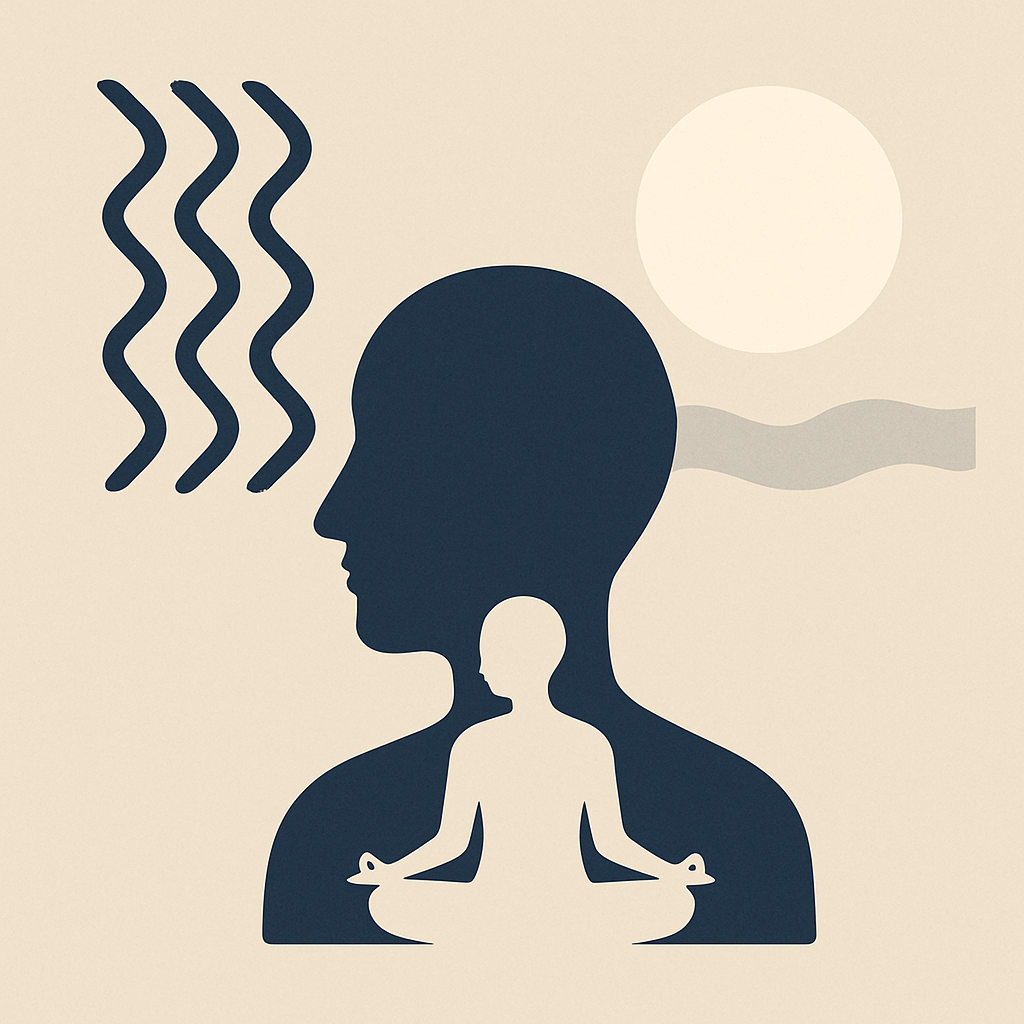
You cannot think your way out of overthinking. You must reduce the triggers that create unnecessary thoughts. Micro-stimulation is one of the most significant - and least recognised - sources of modern mental noise. By reducing the frequency and intensity of digital inputs, you allow your mind to return to a quieter baseline. And from that quieter place, your:
Learning how to reduce digital overthinking is not about using less technology. It is about using technology in a way that respects the limits of your attention and the structure of your mind. When you lower internal noise, clarity naturally emerges.
Recommended Further Reading
The Battle For Your Mind - How To Win Inner Freedom In A Digital Age
Dealing With Distraction - How To Live With Your "Attention Autopilot"
Pausing Before You Act - Make It a Meta-Habit
The Dopamine Delusion - Why Anticipation Beats Achievement
Third Party Reading
How Constant Context Switching Is Harmful
Return from: "Reduce Digital Overthinking" to: Inner Mastery For Outer Impact or Walking The Talk
Next Article: How to Interrupt Emotional Spirals Using Thought-Awareness

LATEST ARTICLES


The Kingdom Is Here, Now - Awakening Is Not Later
 What contemplative traditions point to - and how progress quietly replaces presence. Across contemplative traditions, a strikingly consistent message appears: truth is not somewhere else, not in the…
Adult Development Without Becoming Someone Else - Growth Without Identity Upgrade
 You do not grow by becoming someone else - you grow by placing authority where choice becomes possible. So much of what is written and taught about personal growth quietly assumes an identity upgrade…
Belief and Thought: What Zen Tools Works With - What It Leaves Alone
 A Clarification Of Scope Within Zen Tools - Not A Position On Belief As soon as people begin to notice their own thinking more clearly, questions about belief and thought naturally follow: - If though…
How Thought Becomes Identity - The Hidden Mechanism Behind Overthinking, Self-Worth, and Inner Conflict
 Thought Is an Event, Not a Self Most people believe identity is something they have - a stable sense of who they are. In reality, identity is something the mind is continuously producing. It is not fo…
When the Brain Is Hijacked - Where Does Choice Sit?"
 Pressure, the Hijacked Brain, and the Question of Authority
When the brain is hijacked, people are often told they have “lost control”.That language is understandable - and misleading. In reality, man…
Pressure, the Hijacked Brain, and the Question of Authority
When the brain is hijacked, people are often told they have “lost control”.That language is understandable - and misleading. In reality, man…Reduce Digital Overthinking To Lower Your Constant Inner Noise
 Why Constant Micro-Stimulation Increases Your Internal Noise. Modern digital life generates a level of mental activity that previous generations never had to deal with, and this is fundamentally why w…
Pausing Before You Act - Make It a Meta-Habit
 How A Tiny Moment Unlocks Clarity, Choice, And Self-Leadership. There is a moment in life so subtle you barely register it. A colleague questions your idea. A notification flashes. A moment of uncerta…
How to Interrupt Emotional Spirals Using Thought-Awareness
 The spiral is fueled by your mind believing the story your thoughts tell. No one sets out to be swept away by a surge of emotion. One second you’re handling life, and the next, your mind has broken in…
Universal Awareness and the Machinery of Thought
 You Can’t Control Thoughts - But You Can Learn To See Them. Why do our thoughts have so much power over us - and how do we reclaim clarity? The foundation of thought-awareness is the ability to see yo…
Rewiring Your Autopilot – How To Harness Your Subconscious Mind
 How to harness your subconscious mind and move from passenger to pilot. The case for rewiring your autopilot is that most of what drives your thoughts, reactions, and decisions happens below your cons…
Why You Need To Be Intimate With Your Own Thinking
 How self-awareness and insight transforms delusion into wisdom. We live inside an invisible weather system - one made not of clouds and wind, but of thoughts - and this invisibilty is why you need to…
The Illusion of Closeness in Always-On Relationships
 Closeness that cannot survive absence was never intimacy - only constant stimulation mistaken for connection. We live inside an unprecedented experiment in human connection. For the first time in hist…