The Challenges Of The Road Less Traveled
When Playing The Long Game
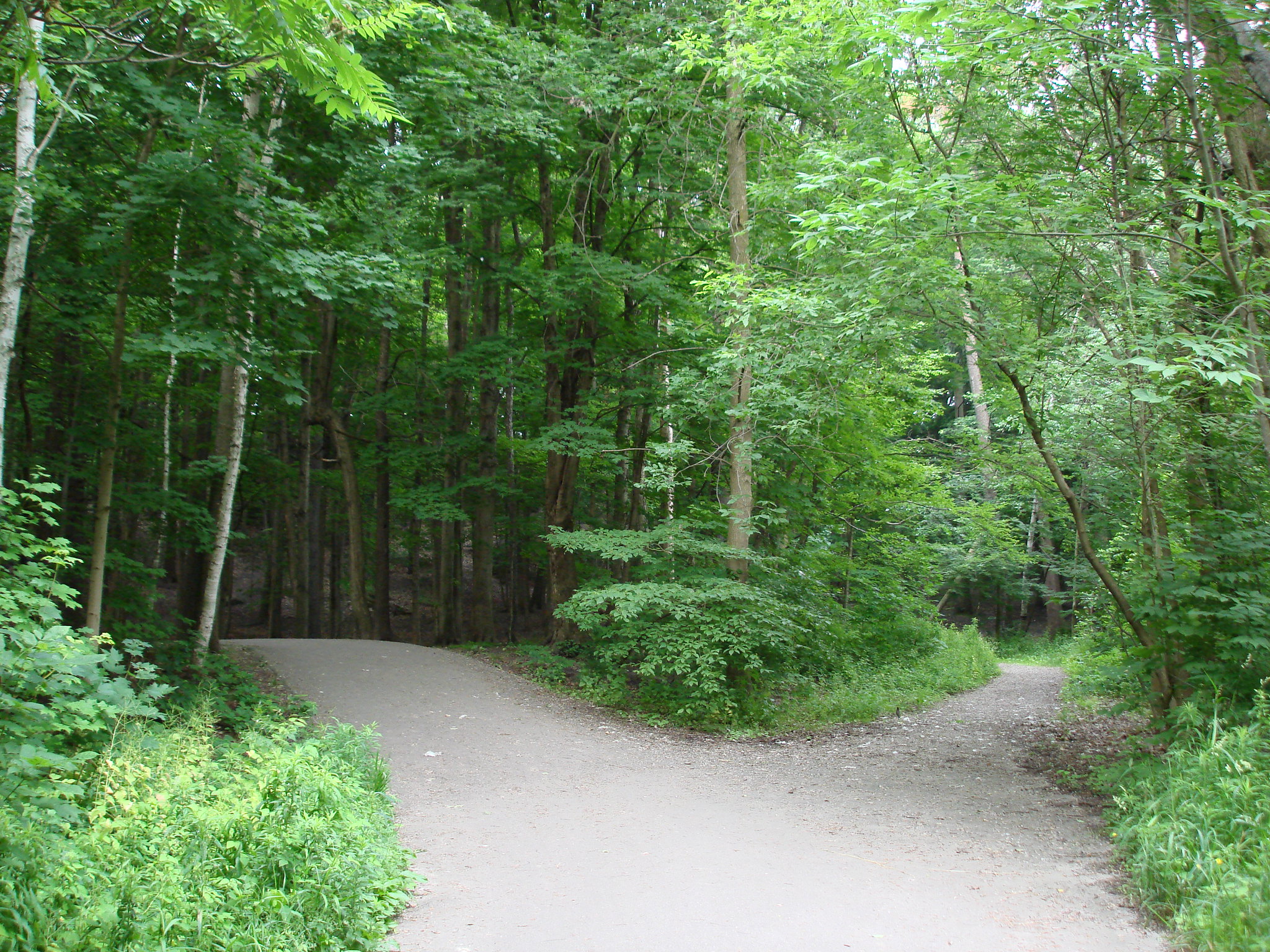
'The road less traveled' is a phrase popularised by M.Scott Peck with the book of that title.
The theme is about:
- The journey to maturity and growth
- The need to confront life's difficulties
- How to move through the hard and often painful process of change toward a higher level of self-understanding
I am using the phrase in the very specific context of the long game which describes an approach to any area of life that sacrifices short term gains for long-term wins.
This is about having a long term goal and taking the necessary steps now to set yourself up for a long term success.
This is rough, tough journey but the rewards are huge.
Playing the long game
The first step to the long game and the acceptance of delayed gratification is the most difficult and negative.
You have to be willing to suffer today in order to reap enormous rewards tomorrow.
The
long game is so hard to play because it involves taking a series of very
small steps, that people rarely see, persistently and consistently over
a long period of time to reach an enormous and visible outcome.
The first question you need to think about is when and where to play the long-term game.
A good choice to play the long game is with things that really matter to you and things that compound such as: knowledge, relationships, and finances.
The second question you have to seriously consider is:
"Are you prepared to pay the cost?"
To do this requires you to ask yourself some very hard questions and to consider the second-order consequences of your decisions - and the key question you will be asking is: "...and then what?"
The immediate effect of this is that you will have to be prepared for the reality that you be less effective, less competent and less efficient in the short term, in order to be much more effective in the long term.
This can be hard and it means being prepared to make a lot of mistakes and errors and even on occasions being prepared to look stupid.
Playing the long game, and paying the price for delayed gratification, is hard enough when you are traveling on a well defined route such as qualifying to be doctor, a lawyer or an academic.
Playing
the long game is doubly difficult when you are traveling on a road less
traveled that is not well defined, where the milestones and metrics are
not known when you start out on this journey.
Examples of the road less traveled are starting a business or any other form of entrepreneurial activity. Other examples could be launching any form of creative or artistic endeavour.
Features of the Road Less Traveled
The well defined route is clearly sign posted and has clear markers, metrics and milestones.
You
do the courses, pass your exams and qualify. Then you repeat the whole
exercise several times until you are professionally qualified. Then
your career follows a largely prescribed and predetermined path. Sure
its tough but your direction of travel is very clear and you have clear
milestones to mark your progress and give you the feedback you need to
keep you on track.
On the road less traveled the route is often not clearly defined and does not have clear metrics and milestones.
I started working in the fuel business about 8 years ago - bringing refineries and resellers of refined fuel products [such as Aviation Jet Fuel and industrial use Diesel] together with qualified proceedable buyers. This is a tough business with many fraudsters and time-wasters.
The guy who was mentoring me told me 2 things that have stuck with me:
Firstly he said: "Stephen there is no instruction manual in this job nothing you can read that will train you or tell you what to do or how to do it. The only way to learn is on the job."
Then he said:
"The one thing that differentiates me from most other people in this business is that I am prepared to fail more times."
To put all this into context, over the 4 years that I knew him and worked with him he handled over 1,000 buyer inquiries and secured 9 different contracts with 9 separate Russian refineries of an average value of c$1bn USD per 12 month contract. He personally earned many millions of dollars in commissions. This man walked the talk.
Using some of my experiences over the past 8 years in this job here are a number of key issues that typically you will face on the road less traveled to delayed gratification and some approaches that I have used for dealing with them.
Issues Faced On The Road Less Traveled
[1] Working Out The Route
- How can you figure out some useful metrics to know how you are doing?
- How do you keep going when the going is tough and you are not sure if you are wasting your time?
- How do you determine the green shoots of progress/recovery from the false dawn of another failure?
- How do you separate and differentiate yourself from the herd?
- How do you cope with the necessary personal and business dependencies on other people?
[2] Maintaining Your Mental Health And Well-Being
- How do you cope when everyone else thinks you’re mad or deluded?
- How do you cope with recurring disappointments and let downs?
- How do you sustain yourself over the long term when it takes 10 to 20 years to succeed?
- How do you stay healthy, positive and sane?
[3] Dealing With Other People
- How much do you tell other people about what you doing?
- How
do you cope with other people’s inability to understand what you are
telling them?
- How do you cope with other people’s recurring disappointment at your lack of progress?
- How do you cope with other people’s negativity?
- How do you cope when other people are doing well and you’re not?
- How do you cope with the feeling of letting your family and those close to you down?
Working Out The Route On The Road Less Traveled

# How can you figure out some useful metrics to know how you are doing on the road less traveled?
- Get some "pegs in the ground" as soon as possible.
- Establish the hard facts of the situation and the environment you are working in.
- You do this by close observation and attentive listening to what people say.
- Make no assumptions and approach everything with a beginners mind.
- Every "fact" has to be verified before it can be regarded as a "hard fact" and before it becomes one of your pegs in the ground.
- Always remember that just because someone you know and trust tells you that something is so, doesn't make it so, it simply means that they genuinely believe it to be so.
- Never be over-awed or impressed by someone else's success, wealth, prestige and power. [I have known and worked with some incredibly successful and wealthy people and they have on many occasions proved to know a lot less than they say they do].
- Never rely on someone else's assessment of a person's worth [in terms of the value they can add to your knowledge] without corroboration from your own direct experience.
- Never rely on a person's own assessment of their worth without corroboration from your own direct experience.
- It is also worth assuming that most, if not all, of the people you talk to will be subject to all the usual cognitive biases and distortions and will unlikely to exercise good thinking skills.
- So in summary, in relation to listening to other people - yes talk with them ask endless questions and listen to them but always remember it is a useful approach to assume that most people don't know what they don't know, and more importantly, they don't know that they don't know.
- Pay very good attention to anyone who demonstrates to you that they know the boundaries of their circle of competence.
- Develop a memory like an elephant.
- Triangulate and apply the duck test
- Be like a good detective and cross reference everything.
- As you slowly find and bang your "pegs in the ground" [and this is a continuous process] you will build a solid and immutable body of knowledge that enables you to figure out the necessary metrics for establishing where you are and where you are heading.
# How do you keep going when the going is tough and you are not sure if you are wasting your time on the road less traveled?
- This very much depends on the stage you are at.
- If you are relatively new to your enterprise or endeavour, the usual advice is press on. However, if you realise very early on that you made a serious error of judgement getting into this, then in this instance it is a very good idea to bail out quickly before you do yourself [and the other parties involved] serious harm.
- If you have been doing this for sometime and you are experiencing yet another major set back or let down then it is a sensible thing to undertake a quick review of your situation. Ultimately it all boils down to opportunity cost.
- A decision to quit based on how you feel in the present moment is most probably the wrong decision.
- The best approach to knowing when to quit is to have a predetermined set of "quitting criteria" which sets out certain key limits and boundaries beyond which you are not prepared to go.
- This involves some important thinking skills and I recommend that you refer to and read the linked article Knowing When To Quit.
- Over the long haul it is a good and sensible thing to periodically revisit your decision on "when to quit" as this will ensure that you remain focused and it will enable you to renew your commitment to the long game.
# How do you determine the green shoots of progress/recovery from the false dawn of another failure?
- Short answer is you can't.
- You will never know until you get there.
- In the early weeks, months and years of your endeavour you will find that you quite understandably and naturally develop a strong attachment to a successful result.
- As the years go by and you have several spins around the emotional and psychological roller-coaster you learn to manage your emotions and weaken your attachment to results. You have to, otherwise it will destroy you.
- Learning how to embrace failure and uncertainty are necessary skills - not just for survival but - because they are an intrinsic part of the process of getting to your ultimate major success.
- You need to develop the quality of antifragility - that is, the quality of something that gets
better, or thrives, in the presence of disorder.
# How do you separate and differentiate yourself from the herd?
- Short answer by becoming better than everyone else.
- Become so good they can't ignore you.
- Adopt the craftsman mindset where you are continuously learning and honing your craft through "deliberate practice".
- Read and apply these 7 proven strategies, with resources, for playing the long game.
# How do you cope with the necessary personal and business dependencies on other people on the road less traveled?
- Short answer - with difficulty!
- Personal dependencies on partners/spouses can be difficult - especially if the other person does not understand or fully support what you are doing
- This can be manageable if you are not in anyway dependent on their financial support, but frankly if you are receiving any degree of financial support from a partner it is essential that they buy-in to what you are doing, and are 100% supportive.
- In my experience it is worth investing the time and effort to ensure that your partner is kept broadly aware of what you are doing. Think of this in terms of expectation management.
- Business dependencies on other people need to be grounded in good communications, good relationships, and controlling your emotions and not burning contacts.
- You really cannot truly know someone’s strengths and weaknesses until you have been in action with them for a long time i.e. 12 months+
- Knowledge is subordinate to results.
- Identify early warning signals of “talk-walk” gap.
- Look for early signs of those who “punch above their weight”.
- Be wary of people who are distrusting and overly protective of disclosure – they are often hiding something and/or untrustworthy.
- Ambition in a business partner is a good thing but identify early warning signals of people who: “don’t know what they don’t know, and don’t know that they don’t know”.
Maintaining Your Mental Health And Well-Being On The Road Less Traveled
# How do you cope when everyone else thinks you’re mad or deluded?
- It's very hard is the honest answer and it is part of the price I have learned to pay for doing something different and what I believe will be extraordinary when it is complete. So I have learned not to be dissuaded by what other people think.
- I learnt fairly early on in my journey on the road less traveled that almost everyone I knew outside of my immediate family and a very few close friends would never understand what I am doing both in terms of the actual business itself but also the long game aspect of it.
- I very rarely talk about what I do except to those very close to me. I basically lead a double life. There is the face I present to the outside world with a scaled down, simplified and modified version of what I really do, and then there is the face I present to those who operate in my business world.
- I do have a few "friends" who have basically told me I am crazy and who have either challenged me and/or laughed and sneered at me. It's amazing how badly people can behave. I have just learned to shrug them off and carry on. Its their problem not mine.
# How do you cope with recurring disappointments and let downs?
- Short answer - you get used to it and learn to live with it.
- As stated in earlier answers I have learned to embrace failure and uncertainty.
- I also think you need to develop the qualities of antifragility as I said in that article: "...it allows us to deal with the unknown, to do things without understanding them - and do them well..."
# How do you sustain yourself over the long term when it takes 10 to 20 years to succeed?
- I just keep on keeping on knowing that I am playing a long game. I monitor the metrics so I know where I am and how I am doing. I just keep my head down and carry on one step at a time, one day at a time.
- I understand and apply many of the principles outlined in this website on mental models and productive thinking
- I also have a deep seated belief and confidence in myself, my life purpose and what I am doing.
- This is who I am. This is what I do. How could it possibly be any other way?
# How do you stay healthy, positive and sane?
- I take care of my mind and body in all the usual ways. I exercise moderately and daily.
- I practise mindfulness and what I call the balanced toolkit approach to life.
- I take great pleasure in the simple joys of life.
Dealing With Other People On The Road Less Traveled

# How much do you tell other people about what you doing?
- Short answer - very little!
- I keep it on the "need to know" basis and generally, the less they know the better.
# How
do you cope with other people’s inability to understand what you are
telling them about what you are doing?
- I have learned not to tell them. I just don't talk about my business.
- If asked in social settings I have several simple answers that are grounded in the truth but sufficiently boring to encourage people to change the subject.
# How do you cope with other people’s recurring disappointment and negativity at your lack of progress?
- Most other people don't know what I do and I don't talk about it so this doesn't arise very often.
- With those few non-family members who do know, I just tell them how it is, or sometimes I just avoid them.
# How do you cope when other people are doing well and you’re not?
- This can be hard but I just focus on what I am doing.
- Comparisons are largely meaningless.
- Nobody truly knows the inside track on someone else's life.
- I also know that I am playing the long game and the rewards are enormous and deservedly so.
# How do you cope with the feeling of letting your family and those close to you down?
- In my darker moments this has been crushing.
- Personally I have been blessed with a very supportive family.
- I don't dwell on negative feelings and I always return to the task in hand and keep on keeping on.
- The long game is a tough game but ultimately an enormously rewarding game.
Reflections and Action Points
Reflections
Why the long game matters
- What in your life is worth playing the “long game” for — i.e., willing to accept delayed gratification, small steps over time?
- The article emphasises that things that compound (knowledge, relationships, finances) are good playgrounds.
- Do you already have a long-term goal that excites you and justifies the “road less travelled” energy (i.e., slower, less certain path)?
- How comfortable are you with being “less effective, less efficient in the short term” in order to be much more effective in the long term?
Working out the route when there’s no clear map
- In your chosen endeavour, how clear are your milestones, metrics, or signposts?
- The article points out that on the road less traveled, route and metrics may be undefined.
- What “pegs in the ground” (i.e., early markers, experiments, observable facts) can you plant now to verify your direction and build confidence?
- Are you monitoring for “false dawns” vs genuine recovery or progress (the article says you can’t always tell early on)?
Mental health & resilience on the journey
- How do you handle when others think your path is odd or “you’re crazy” because you’re committing to long-term, uncertain work?
- The author shares his experience of being misunderstood.
- How comfortable are you with repeated setbacks, let-downs, and living in uncertainty for extended periods (10-20 years, even)?
- What routines or practices do you have (or could you build) to sustain your well-being, positivity and sanity while playing the long game?
Dealing with people, expectation-management, comparison R
- How transparent are you with others about what you are doing, especially if your path is unconventional?
- The article suggests minimal disclosure sometimes.
- How do you respond when you compare your progress with others who seem further ahead?
- The article reminds us “comparisons are largely meaningless.”
- Are there people close to you who need to buy into or at least accept your path (for example family, partner, team)? How are you managing their expectations?
Action Points
Track your internal “voices” for one week.
- Use a simple journal or log. Whenever you notice repetitive negative self-talk or inner resistance (e.g., “I’ll never get this done”, “I’m not good enough”, “Better wait until tomorrow”), jot it down.
- At end of week, review for common patterns or triggers (time of day, context, physical state, stress).
- Then ask: “What belief is behind this voice?” and “What alternative voice or belief would serve me better?”
Create a personal “state-shift” routine for critical moments.
- Define 2-3 physical or mental cues you’ll use to switch into peak mode (e.g., a deep breath + visualisation + affirmative statement).
- Practice this when you aren’t under pressure (so you get good at it).
- Then deliberately use it when you anticipate a “mission-critical” moment (important meeting, decision, tackling a big task).
Design and embed a short daily meditation/mindfulness ritual.
- Start small: 5 minutes per day, at a consistent time (e.g., early morning or right after lunch).
- The goal is to build muscle in noticing thoughts, slowing down the mind, observing rather than being driven by the flow.
- After each session, note how you feel differently (less reactivity? more clarity?).
- Over time increase duration or depth as you feel comfortable.
Map one area where you’re trying to change but meeting resistance.
- Choose a goal (e.g., changing a habit, starting a new routine, stepping into a new role).
- Write down: (a) What I intend to do. (b) What part of me resists doing it (fear, comfort zone, identity). (c) What I’ll do this week to move forward regardless of the resistance (even if small).
- At the end of the week: review what happened, what inner resistance came up, how you responded, and decide on your next step.
Schedule a “brain-balance check-in” each week.
- Pick a consistent time (e.g., Sunday evening) for 10 minutes. Ask yourself: “Where did I feel aligned (thinking, feeling, acting) this week?”
- “Where did I feel dis-aligned or torn (e.g., mind said yes, body felt no, emotion pulled one way)?”
- Based on that, set one micro-adjustment for the coming week (e.g., if body felt fatigued, reduce task load; if emotions were highly reactive, schedule an extra meditation; if thinking got stuck, schedule reflection time).
The Road Less Traveled - Further Resources
Here are a number of touch points with other key articles on this site:

Next Article:
How To Benefit From The Unseen Margins - 5 Key Tips For Success
Return:
to: Mental Models
Or to: Walking The Talk

LATEST ARTICLES


Belief and Thought: What Zen Tools Works With - What It Leaves Alone
 A Clarification Of Scope Within Zen Tools - Not A Position On Belief As soon as people begin to notice their own thinking more clearly, questions about belief and thought naturally follow: - If though…
How Thought Becomes Identity - The Hidden Mechanism Behind Overthinking, Self-Worth, and Inner Conflict
 Thought Is an Event, Not a Self Most people believe identity is something they have - a stable sense of who they are. In reality, identity is something the mind is continuously producing. It is not fo…
When the Brain Is Hijacked - Where Does Choice Sit?"
 Pressure, the Hijacked Brain, and the Question of Authority
When the brain is hijacked, people are often told they have “lost control”.That language is understandable - and misleading. In reality, man…
Pressure, the Hijacked Brain, and the Question of Authority
When the brain is hijacked, people are often told they have “lost control”.That language is understandable - and misleading. In reality, man…Reduce Digital Overthinking To Lower Your Constant Inner Noise
 Why Constant Micro-Stimulation Increases Your Internal Noise. Modern digital life generates a level of mental activity that previous generations never had to deal with, and this is fundamentally why w…
Pausing Before You Act - Make It a Meta-Habit
 How A Tiny Moment Unlocks Clarity, Choice, And Self-Leadership. There is a moment in life so subtle you barely register it. A colleague questions your idea. A notification flashes. A moment of uncerta…
How to Interrupt Emotional Spirals Using Thought-Awareness
 The spiral is fueled by your mind believing the story your thoughts tell. No one sets out to be swept away by a surge of emotion. One second you’re handling life, and the next, your mind has broken in…
Universal Awareness and the Machinery of Thought
 You Can’t Control Thoughts - But You Can Learn To See Them. Why do our thoughts have so much power over us - and how do we reclaim clarity? The foundation of thought-awareness is the ability to see yo…
Rewiring Your Autopilot – How To Harness Your Subconscious Mind
 How to harness your subconscious mind and move from passenger to pilot. The case for rewiring your autopilot is that most of what drives your thoughts, reactions, and decisions happens below your cons…
Why You Need To Be Intimate With Your Own Thinking
 How self-awareness and insight transforms delusion into wisdom. We live inside an invisible weather system - one made not of clouds and wind, but of thoughts - and this invisibilty is why you need to…
The Illusion of Closeness in Always-On Relationships
 Closeness that cannot survive absence was never intimacy - only constant stimulation mistaken for connection. We live inside an unprecedented experiment in human connection. For the first time in hist…
Why Approval Feels Like Safety And Distance Feels Like Danger
 Safety is not found in being approved - it appears when approval is no longer required. When approval feels like safety, connection stops being something we enjoy and quietly becomes something we rely…
You Do Not Need Better Boundaries - You Need Clearer Thought
 What no longer feels like your responsibility no longer crosses your boundaries. This article explains why you don’t need better boundaries - you need clearer thought - how modern life systematically…