Personality Quiz
Who Do You Think You Are?
And What Makes You So Special?
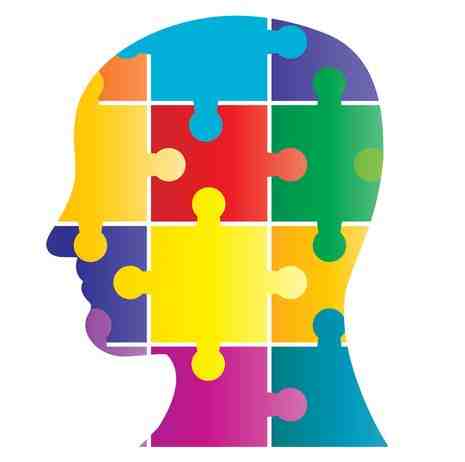
A personality quiz comprises a list of questions designed to reveal something about the participant.
There are a large number of personality quizzes available online and many of these are, to put it bluntly, trivial and intended for (or at least only suitable for) entertainment purposes.
The overall focus of this site all about knowing how to think effectively and improve the outcomes that you experience in your life by improving your responses to the events that impact you.
In summary, the stronger your response - the better the outcome.
A key component of this is developing a level of self-knowledge and understanding how your mind works.
In this context, these assessment tools are useful from the perspective of understanding:
- The drivers in our motivation as individuals
- The difference in our individual motivational drivers
- Individual differences in our mental processing functions
Through the intelligent use of the personality quiz we can gain valuable
insights into how we function as individuals and particularly how,
where and why we differ from each other in why we do things and how we
think.
Balance is essential
As with all things, a balanced approach to this is necessary.
Criticisms are sometimes made of a particular approach on the basis that "people can’t be shoe-horned in one or other simple category – we are more complex than that".
This is of course true, but nevertheless we can gain helpful insights and perspectives from these personality quizzes and tests.
Another lack of balance occurs with some people who tend to "over-interpret" results and this is also unhelpful.
So it is important to remember that these approaches and tools are aids to understanding overall personality, preferences, strengths and processing styles - and this is always a subtle and complex mixture in each individual person.
Quizzes and assessment tools
Here is a cross-section of some of the main personality quizzes and assessment tools. Again, may I remind you that we are looking at this through the lense of managing personal change in an organisational change management context, so this is a very high-level summary.
For more in depth information please follow up the various links to external resources that are provided below.
I have also included links to a number of free on-line personality quizzes based on these assessment tools.
Myers Briggs Personality Types
Why understanding type differences is so important in change management
"Whatever the circumstances of your life, the understanding of type can make your perceptions clearer, your judgements sounder and your life close to your heart's desire."
[Isabel Briggs Myers]
The Myers Briggs [personality or psychological] Type Indicators are based on the of work of Carl Jung, in which he developed theories to attempt to explain the differences between normal healthy people.
Jung concluded that differences in individual behaviour are the result of innate tendencies that people in the manner in which they use their minds, and that they tend to do in quite different ways.
Myers Briggs types are based on 8 basic mental functions observed by Jung. The initial observation was that people's minds (when active) are involved in receiving information and processing information. This then developed into a recognition of the different ways people receive, process and interpret that information.
Full in-depth resources here: Myers Briggs Type Indicators
Free Online test - Identify Your Type with Jung Typology Test
The Enneagram
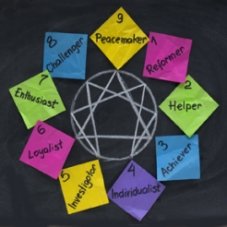
The Enneagram of Personality Types was created by Oscar Ichazo. It amalgamates themes and elements of a number of wisdom traditions.
The Enneagram features nine distinct personality types.
The enneagram system suggests that we each of us is born with a dominant, and unchangeable, personality type which shapes how we adapt to our early childhood environment.
A more detailed overview on this site, and further resources including free tests can be found here: Enneagram of Personality Types
Benziger Thinking Styles Assessment
Dr Katherine Benziger takes a completely different approach to the assessment of personality and thinking styles and focuses on the physiological and neurological aspects of how our brains actually function rather than the theoretical and philosophical basis of most psycho-metric tests.
For full indepth resources (including tests) see:
Benziger Thinking Styles Assessment
Howard Gardner's Multiple Intelligence Theory
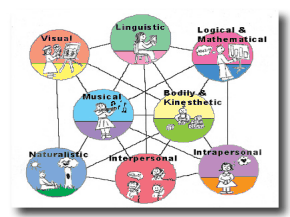
The multiple intelligence theory postulates that we each have a
preferred learning style. This is a cognitive perspective of human
nature. It suggests that in addition to our natural strengths and
behavioural patterns we develop our own individual method of learning.
This theory is grounded in an expanded view of traditional definitions of intelligence.
Gardner's theory suggests that people possess a set of multiple intelligences, and he identifies seven intelligences.
For full in-depth resources (including tests)see:
Multiple Intelligences.
Further Resources
Here is another research based personality quiz that is available online together with extensive resources: The Big Five Personality Test
This site is not about personality quizes but "90 Visual Phenomena & Optical Illusions". This is not a gimmick and is a serious and very interesting site that powerfully and visually demonstrates the limits of our visual perceptions: 90 Visual Phenomena & Optical Illusions
Return to: Managing Personal Change

LATEST ARTICLES


Belief and Thought: What Zen Tools Works With - What It Leaves Alone
 A Clarification Of Scope Within Zen Tools - Not A Position On Belief As soon as people begin to notice their own thinking more clearly, questions about belief and thought naturally follow: - If though…
How Thought Becomes Identity - The Hidden Mechanism Behind Overthinking, Self-Worth, and Inner Conflict
 Thought Is an Event, Not a Self Most people believe identity is something they have - a stable sense of who they are. In reality, identity is something the mind is continuously producing. It is not fo…
When the Brain Is Hijacked - Where Does Choice Sit?"
 Pressure, the Hijacked Brain, and the Question of Authority
When the brain is hijacked, people are often told they have “lost control”.That language is understandable - and misleading. In reality, man…
Pressure, the Hijacked Brain, and the Question of Authority
When the brain is hijacked, people are often told they have “lost control”.That language is understandable - and misleading. In reality, man…Reduce Digital Overthinking To Lower Your Constant Inner Noise
 Why Constant Micro-Stimulation Increases Your Internal Noise. Modern digital life generates a level of mental activity that previous generations never had to deal with, and this is fundamentally why w…
Pausing Before You Act - Make It a Meta-Habit
 How A Tiny Moment Unlocks Clarity, Choice, And Self-Leadership. There is a moment in life so subtle you barely register it. A colleague questions your idea. A notification flashes. A moment of uncerta…
How to Interrupt Emotional Spirals Using Thought-Awareness
 The spiral is fueled by your mind believing the story your thoughts tell. No one sets out to be swept away by a surge of emotion. One second you’re handling life, and the next, your mind has broken in…
Universal Awareness and the Machinery of Thought
 You Can’t Control Thoughts - But You Can Learn To See Them. Why do our thoughts have so much power over us - and how do we reclaim clarity? The foundation of thought-awareness is the ability to see yo…
Rewiring Your Autopilot – How To Harness Your Subconscious Mind
 How to harness your subconscious mind and move from passenger to pilot. The case for rewiring your autopilot is that most of what drives your thoughts, reactions, and decisions happens below your cons…
Why You Need To Be Intimate With Your Own Thinking
 How self-awareness and insight transforms delusion into wisdom. We live inside an invisible weather system - one made not of clouds and wind, but of thoughts - and this invisibilty is why you need to…
The Illusion of Closeness in Always-On Relationships
 Closeness that cannot survive absence was never intimacy - only constant stimulation mistaken for connection. We live inside an unprecedented experiment in human connection. For the first time in hist…
Why Approval Feels Like Safety And Distance Feels Like Danger
 Safety is not found in being approved - it appears when approval is no longer required. When approval feels like safety, connection stops being something we enjoy and quietly becomes something we rely…
You Do Not Need Better Boundaries - You Need Clearer Thought
 What no longer feels like your responsibility no longer crosses your boundaries. This article explains why you don’t need better boundaries - you need clearer thought - how modern life systematically…