The Wilderness Years
3 Keys To An Exit

What Are The Wilderness Years?
The wilderness years can be described as any lengthy time, longer than a year, that is spent aimlessly; without an immediate purpose, or without a current goal.
As a place, the wilderness is a region that is uncultivated and uninhabited by humans.
The internal psychological, emotional and spiritual landscape of the wilderness state is one of being unable to find one's way, of aloneness, bewilderment, confusion and disconnection.
The state and experience of the wilderness years differs from similar states such transition or limbo.
In transition you know where you have come from, and in the state of limbo you know where you want to get to, but the wilderness is a state that has no clearly defined beginning or end, and it can drag on for a lot, lot longer.
In this article I am going to tell the original story of the wilderness years and take a look at some of the key insights from that story, plus 3 keys to an exit from the wilderness years which are based on personal experience.
The Wilderness Years - The Biblical Story
In the sacred books of each of the Abrahamic faith traditions there are
references to the presence of what we would now refer to as Israeli
tribes located in the land of Goshen, a region within ancient Eqypt.
The exodus
The
Judaic Torah and Christian Old Testament record the legend of the
exodus of these tribes c 1200 BCE from the bondage of slavery in Egypt,
under the leadership of Moses, towards what they believed to be their
promised land known as Canaan or Palestine.
The promised land
The
land of Canaan was located in the Levant region of modern Lebanon,
Syria, Jordan, and Israel. This was the land they believed to be
promised to them by their god JHWH (Jahweh/Jehovah)
Leaving aside
all modern sensitivities and sensibilities about land grabs and
genocide, and the theological difficulties of how a God of love could
sanction such a strategy, this was their goal and destination.
The journey
The
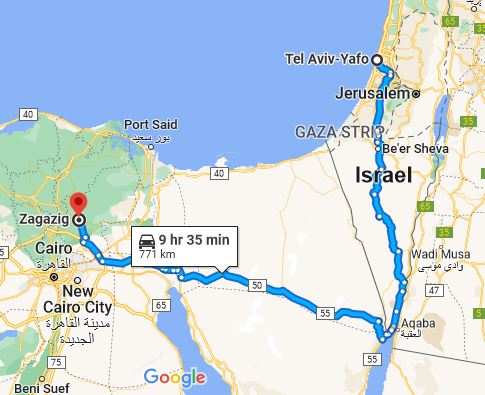
modern Egyptian city of Zagazig is located north of Cairo in the
eastern part of the Nile Delta. This area was known as the land of
Goshen in ancient times. The modern Israeli city of Tel Aviv (Jaffa to
the ancients) is located on the Mediterranean coast and could be
regarded as the coastal epi-centre of ancient Canaan.
According to Google maps
the distance between these two cities is 779 km which takes 9 hours 19
mins by car, and 153 hours if you were sufficiently foolhardy to walk
it.
However, looking at maps based on that historical period you could have made that journey traveling about 200 km and could have accomplished it in about 10 days on foot on the Horus Way – the ancient Egyptian equivalent of a modern coastal motorway linking ancient Egypt and Canaan.
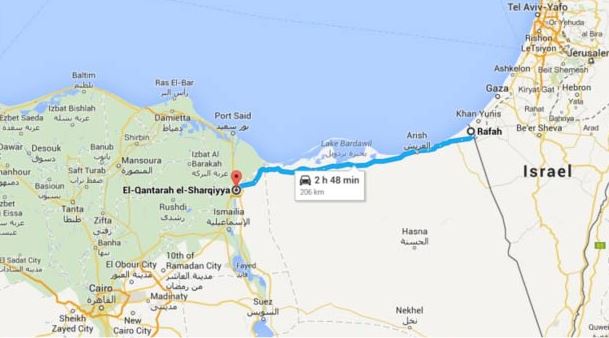
Why did it take so long to travel so little distance?
So why do the narratives of this exodus tell us that it took the Israeli tribes forty years years of meandering around the wilderness regions of the Sinai peninsular to accomplish their objective?
To put this in context, we are talking about several hundred thousand semitic tribes people stuck in transition
between Goshen (Egypt) and their promised and declared objective of
Canaan - a mere 200km away - for forty years, which was the duration of a
lifetime in that era.
So what happened, and why?
According
to the ancient narrative, their leader Moses sent 12 spies into the land of Canaan to
assess the wealth and prosperity of the land they were to conquer, and
to assess the strength of the military defences the Israeli armies would
have to overcome.
10 spies returned overwhelmed with the
potential spoils of victory but entirely negative and defeatist in their
assessment of the Israeli's chances of military success. Only 2 spies
returned with positive assessments.
The narratives recall that the Israeli tribes-people sided with the negative view and JHWH (their god) was incensed at their:
- Low expectation
- Fear of failure
- Lack of trust
- Lack or loss of vision
The wilderness was part of their direct route to the "promised land" and should have taken about 10-12 days if they had followed the direct Horus Route. But they spent 40 years meandering around the Sinai Peninsular because of their negativity and lack of faith in their god to empower them to take possession of the land by "divine right of conquest".
What they had to learn
The narrative recounts how that JHWH cursed them to spend 40 years in
transition until that generation of no faith had all died, and a new
generation emerged with a:
- New identity
- New way of doing things
- New vision and sense of mission
These themes are universal to the transition experience.
Damaging diversions and distractions before the transition is complete
However, the narrative recounts that their leader Moses had to help the
emergent generation address some dangerous and potentially damaging
diversions that represented the old way of thinking:
- A return to the past - The pull of nostalgia of getting back to "how things used to be" is very strong in times of doubt and uncertainty.
- An escape into weird or inappropriate solutions - The worship of gold idols or the lure of easy/instant riches and "get rich quick" schemes are a deadly cul-de-sac and undermine the new vision.
- An early exit to greener fields - Moses had to contend with this one as people looked longingly at some of the tribes that they passed along the route, and joined them. Short cuts out of the transition process can not deliver because the necessary lessons are not learned.
- An impulse to rush - Moses had to deal with people who didn’t see why they couldn’t enter the Promised Land much sooner, but they weren't ready and had not learned the lessons they needed to, to be able to enter the promised land.
These diversions are the product of the ego mind looking to re-gain control.
The temptation to engage with any of these distractions is totally understandable but ultimately pointless as it will do nothing to progress the process of transition and will likely prolong, or permanently postpone, your emergence from the wilderness years.
Lessons From The Wilderness Years
There are many reasons why we can end up in a wilderness experience, here are 3 of the most common:
- Poor Choices - Sometimes this experience may be the consequence of poor choices and bad decisions, but this is not always the case.
- Alignment - For some who go through this experience it is about alignment. They have a sense of purpose and a deep commitment to their objectives but events are not in their favour and the wilderness years are a price that has to be paid until conditions and circumstances align in their favour.
- Randomness - Another factor that we often underestimate is the random nature of events, especially unforeseen events.
At time of writing few of us would have anticipated the recent pandemic or the Russian invasion and war of aggression against the people of Ukraine.
Yet these things have happened and the consequences of these events have had a dramatic effect on many people's lives. Lives have been lost, employment and wealth has been destroyed and the societal and political after-effects will continue to work themselves out for years to come.
History is littered with examples of people great and small who have been subject to the experience of the wilderness years.
The reasons for their experience are varied but the dominant theme for those who have successfully emerged is universal:
How you have ended up in the wilderness is of far less consequence than the lessons to be learnt while you are there.
The 3 key lessons
In my experience, there are 3 key lessons to successfully navigating your route to an exit from the wilderness years, you need to:
1. Undergo the transition process
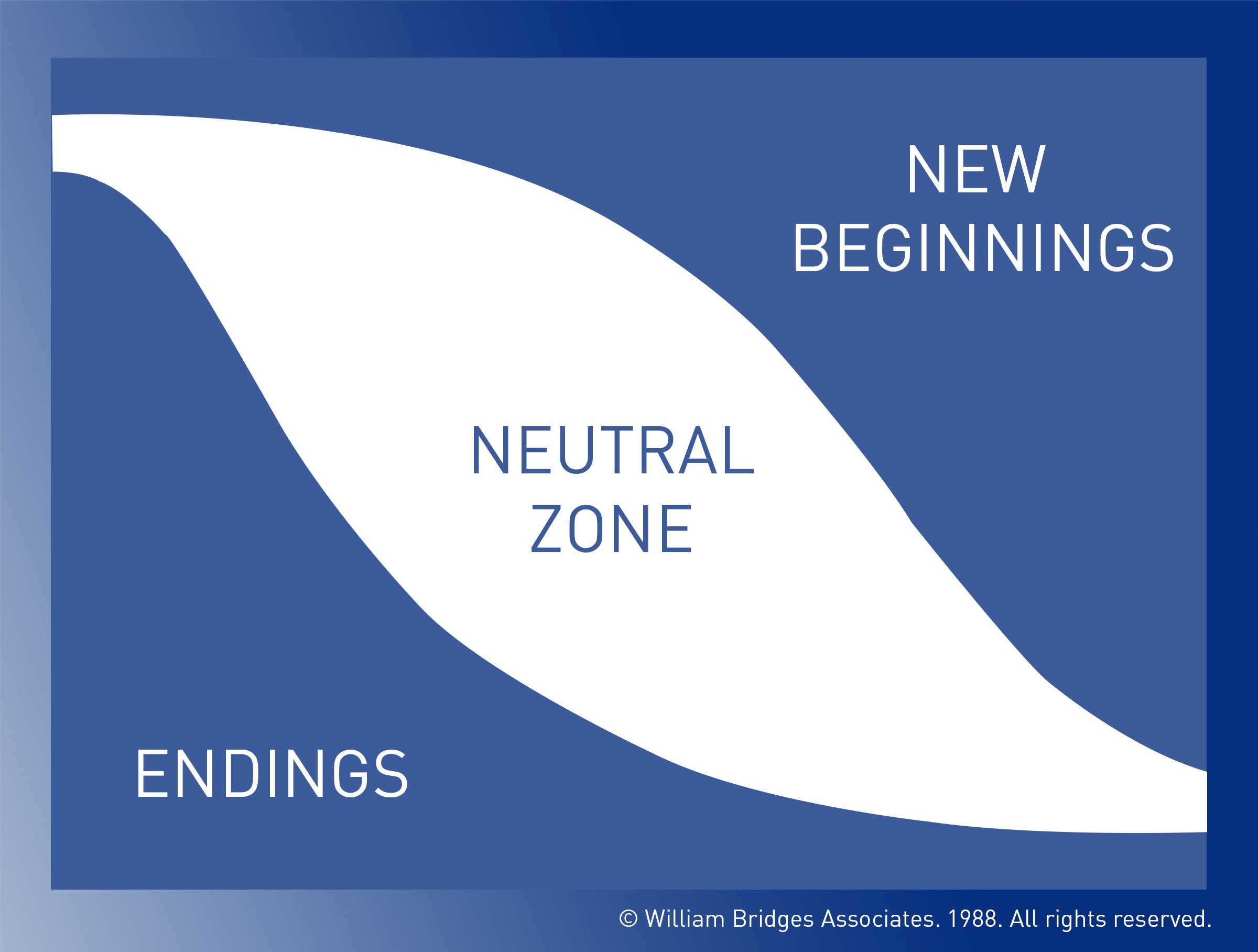
The transition process is actually a 3 stage process which starts with
[a] Recognition and coming terms with that which has ended or been lost.
[b] Moves into a neutral phase where critical psychological realignments and re-patterning takes place.
[c] Finally the new beginning phase where a new identity emerges, a new energy is experienced, together with a new sense of purpose.
You will remain stuck in the wilderness years until you move through this process.
2. Accept the gestation period
Life works in cycles and that does involve waiting, and a significant aspect of the wilderness years is a gestation period.
A gestation period can be of varying length, it may be a few weeks of months and it can be many years. As a general rule, the larger the objective and outcome the longer it takes.
The attrition factor of the endless waiting is what wears so many people down especially when they see little or no growth or progress. This can cause you
to doubt your purpose, or succumb to one or more of the diversion and distractions outlined above. In the worst case scenario, to admit defeat and give up.
3. Recognise limbo and transform the "dead time" into "alive time"
Once you have entered the transition process and have understood and accepted the gestation period, the next issue to address is what to do with your time.
I have found that rather than just sitting around passively in limbo until better times arrive, it works far better to spend your time consciously and constructively learning, growing, developing and growing.
Limbo is transformed when you use it as an opportunity to do what you've long needed to do.
When you emerge from the wilderness years you want to be to look back with a healthy pride and satisfaction at what you have achieved during this time and to have something to show for it.
Next Article: Lost Stuck & Going Round In Circles?
Return from "The Wilderness Years" to: Walking The Talk

LATEST ARTICLES


The Kingdom Is Here, Now - Awakening Is Not Later
 What contemplative traditions point to - and how progress quietly replaces presence. Across contemplative traditions, a strikingly consistent message appears: truth is not somewhere else, not in the…
Adult Development Without Becoming Someone Else - Growth Without Identity Upgrade
 You do not grow by becoming someone else - you grow by placing authority where choice becomes possible. So much of what is written and taught about personal growth quietly assumes an identity upgrade…
Belief and Thought: What Zen Tools Works With - What It Leaves Alone
 A Clarification Of Scope Within Zen Tools - Not A Position On Belief As soon as people begin to notice their own thinking more clearly, questions about belief and thought naturally follow: - If though…
How Thought Becomes Identity - The Hidden Mechanism Behind Overthinking, Self-Worth, and Inner Conflict
 Thought Is an Event, Not a Self Most people believe identity is something they have - a stable sense of who they are. In reality, identity is something the mind is continuously producing. It is not fo…
When the Brain Is Hijacked - Where Does Choice Sit?"
 Pressure, the Hijacked Brain, and the Question of Authority
When the brain is hijacked, people are often told they have “lost control”.That language is understandable - and misleading. In reality, man…
Pressure, the Hijacked Brain, and the Question of Authority
When the brain is hijacked, people are often told they have “lost control”.That language is understandable - and misleading. In reality, man…Reduce Digital Overthinking To Lower Your Constant Inner Noise
 Why Constant Micro-Stimulation Increases Your Internal Noise. Modern digital life generates a level of mental activity that previous generations never had to deal with, and this is fundamentally why w…
Pausing Before You Act - Make It a Meta-Habit
 How A Tiny Moment Unlocks Clarity, Choice, And Self-Leadership. There is a moment in life so subtle you barely register it. A colleague questions your idea. A notification flashes. A moment of uncerta…
How to Interrupt Emotional Spirals Using Thought-Awareness
 The spiral is fueled by your mind believing the story your thoughts tell. No one sets out to be swept away by a surge of emotion. One second you’re handling life, and the next, your mind has broken in…
Universal Awareness and the Machinery of Thought
 You Can’t Control Thoughts - But You Can Learn To See Them. Why do our thoughts have so much power over us - and how do we reclaim clarity? The foundation of thought-awareness is the ability to see yo…
Rewiring Your Autopilot – How To Harness Your Subconscious Mind
 How to harness your subconscious mind and move from passenger to pilot. The case for rewiring your autopilot is that most of what drives your thoughts, reactions, and decisions happens below your cons…
Why You Need To Be Intimate With Your Own Thinking
 How self-awareness and insight transforms delusion into wisdom. We live inside an invisible weather system - one made not of clouds and wind, but of thoughts - and this invisibilty is why you need to…
The Illusion of Closeness in Always-On Relationships
 Closeness that cannot survive absence was never intimacy - only constant stimulation mistaken for connection. We live inside an unprecedented experiment in human connection. For the first time in hist…