Leverage
Achieving A Large Output For A Small Input At The Right Place
A small well-focused action can produce a significant and long-lasting improvement - when applied in the right place.
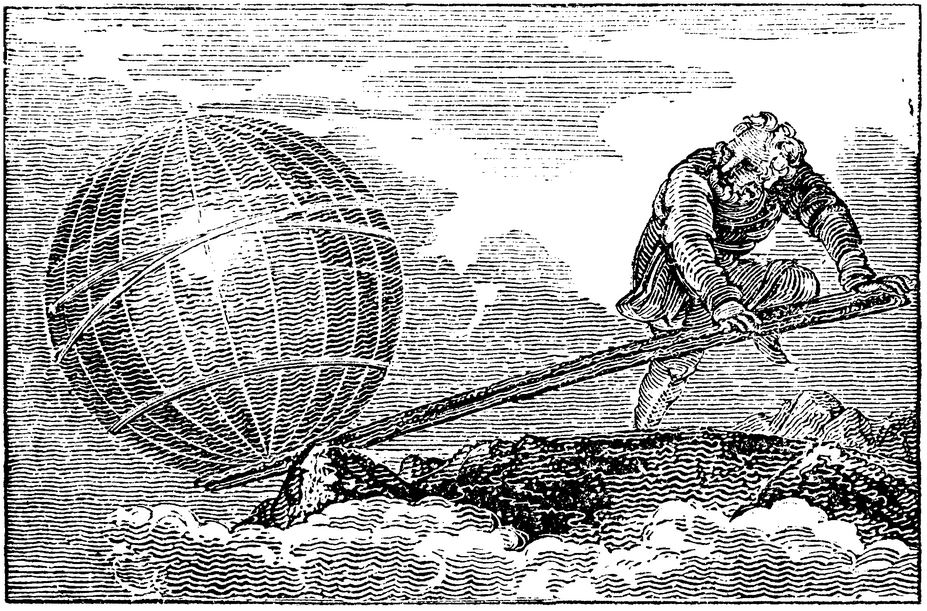
Leverage - An Overview
Leverage is an engineering principle where the application of force in a specific area achieves a larger result that would be achieved by applying that same force elsewhere. In this context it is commonly used to move large objects with a smaller applied force
It has applications across many areas of life.
High leverage activities are those where you can achieve a large increase in output for a relatively small amount of additional input.
When applied in the right place, a small well-focused action can produce a significant and long-lasting improvement.
For example, the small action of stopping smoking leverages enormous benefits in terms of improved health and longevity.
The key to this is knowing how to identify the point of maximum leverage.Identifying these points enables us to:
- Undertake existing tasks more effectively and beneficially
- Create new courses of action
- Become more aware of things that may cause problems before they do
- To "reverse engineer" the situation to see how to remove the issue
At the personal level, maximizing the use of time, which is one of your scarcest resources, is an extremely practical and valuable application of leverage. The long-term benefits can be enormous.
In business, and specifically various areas of investment, financial leverage is a common practice and is where borrowed money is used to increase capital, and the increased profit generated is hoped to be in excess of the cost of finance.
In personal and business situations, relationships can generate considerable leverage which can create positive and negative outcomes.
Social Leverage
# The Leverage of Social Contagion
Social contagion is a hardwired reflex that is a basic building block of human interaction.
In Social Contagion - The Tidal Swirl Of Other People's Emotional Turbulence we looked in some depth at how and why we are so susceptible to other peoples emotions.
With the passage of time, there is tremendous leverage in your life from the impact of the presence of the people you spend most time with.
As Jack Canfield has observed:
"You are the average of the 5 people you spend the most time with."
# The Leverage of Primal Leadership
Daniel Goleman, the former journalist, who brought the concept of emotional intelligence into the popular domain has developed the concept further and has written and spoken extensively about the emotional impact a leader has on the organization he/she leads. Goleman terms this Primal Leadership:
"In the modern organization, this primordial emotional task—though by now largely invisible—remains foremost among the many jobs of leadership: driving the collective emotions in a positive direction and clearing the smog, created by toxic emotions. This task applies to leadership everywhere, from the boardroom to the shop floor."
In terms of leverage, Goleman claimed to have research which showed that:
"The leader’s style determines about 70% of the emotional climate which in turns drives 20-30% of business performance."
# The One-To-One Leverage of Persons Of Direct Influence
We are all susceptible to people who are persons of direct influence [PODI] in our lives. The reverse is also true in that you are a PODI in someone else's life.
There are innumerable situations in life where people can fulfill the role of PODI in someone's life:
- In informal ways as relative, friend, former teacher or employer, mentor, influential friend, social group leader, or in formal roles:
- A PODI can be in a formal position such as a line management/direct report situation or, in a matrix managment situation, in a technical or advisory position of influence.
In ordinary everyday "business as usual" situations this influence may be slight and fairly marginal, but when an individual is in a situation where powerful negative situational factors are in play the leverage of the PODI can be major and far reaching.
This was horribly illustrated by the abuse of Iraqi prisoners by US servicemen at Abu Ghraib prison where the psychologists exercised considerable formal influence in advising and suggesting interrogation techniques.
Business Leverage
Business leverage is:
- Based on perceptions. It only exists when both parties to a negotiation recognize that one party has an
advantage. The strength of the position of the party with the advantage is also a matter of perception. This is especially true when dealing in "secondary currency" [i.e. non-monetary currency where one party stands to gain something that matters greatly to them and is a consequence of a successful transaction].
- Dynamic. Leverage that is based on information can change quickly as new
information becomes available.
- Situation specific. A company with
privileged information might have an advantage over another company, but
in a different situation, the advantage could be reversed
Personal Leverage
There is major personal leverage to be had from following the core themes of this site, namely:
But this leverage is gained by:
Thinking Leverage
Here are 3 mental models which can be particularly useful in identifying points of leverage:
- Inversion - Think about what you want to avoid, or the opposite of what you want to achieve, then plan effectively to prevent failure.
- Second Order Thinking - Going beyond the obvious, thinking in terms of interactions and time, seeing things that other people don't or can't see, avoiding unintended consequences. Keep asking the key question: "And then what..?"
- Pareto’s Principle — This principle states that 80% of outcomes are the result of 20% of inputs. Recognizing the 20% can provide us with a great deal of leverage AND even more so when focusing on and finding the top 1% who will account for 50% of the results.
Related Models and Concepts
- Critical mass — Also known as a boiling point or
tipping point, critical mass is the point where something (an idea,
belief, trend, virus, behavior etc) is prevalent enough to grow at an
exponential rate.
- Power law — A power law is a relationship between two things when a change in one can lead to a large change in the other, regardless of the initial quantities.
- Autocatalysis - aka The "Lollapalooza Effect" - This occurs when two or more forces are all operating in the same
direction and rather than a simple addition you get a nuclear explosion
once you reach a certain point of interaction between those forces.
- Compounding - Consistent investments of time, effort, and money can pay off exponentially in the long run as returns accrue from both principal and accumulated interest as ROI. James Clear has said that: "Habits are the compound interest of self-improvement"
Return from "Leverage" to: Mental Models

LATEST ARTICLES


Why the Brain Replays Threat at Night - And What It’s Responding To
 Bad Dreams, Mental Overload, and the Cost of Unresolved Threat Processing in the Brain. Many people lie awake at night wondering why the mind turns hostile when the day goes quiet. Thoughts that felt…
The Kingdom Is Here, Now - Awakening Is Not Later
 What contemplative traditions point to - and how progress quietly replaces presence. Across contemplative traditions, a strikingly consistent message appears: truth is not somewhere else, not in the…
Adult Development Without Becoming Someone Else - Growth Without Identity Upgrade
 You do not grow by becoming someone else - you grow by placing authority where choice becomes possible. So much of what is written and taught about personal growth quietly assumes an identity upgrade…
Belief and Thought: What Zen Tools Works With - What It Leaves Alone
 A Clarification Of Scope Within Zen Tools - Not A Position On Belief As soon as people begin to notice their own thinking more clearly, questions about belief and thought naturally follow: - If though…
How Thought Becomes Identity - The Hidden Mechanism Behind Overthinking, Self-Worth, and Inner Conflict
 Thought Is an Event, Not a Self Most people believe identity is something they have - a stable sense of who they are. In reality, identity is something the mind is continuously producing. It is not fo…
When the Brain Is Hijacked - Where Does Choice Sit?"
 Pressure, the Hijacked Brain, and the Question of Authority
When the brain is hijacked, people are often told they have “lost control”.That language is understandable - and misleading. In reality, man…
Pressure, the Hijacked Brain, and the Question of Authority
When the brain is hijacked, people are often told they have “lost control”.That language is understandable - and misleading. In reality, man…Reduce Digital Overthinking To Lower Your Constant Inner Noise
 Why Constant Micro-Stimulation Increases Your Internal Noise. Modern digital life generates a level of mental activity that previous generations never had to deal with, and this is fundamentally why w…
Pausing Before You Act - Make It a Meta-Habit
 How A Tiny Moment Unlocks Clarity, Choice, And Self-Leadership. There is a moment in life so subtle you barely register it. A colleague questions your idea. A notification flashes. A moment of uncerta…
How to Interrupt Emotional Spirals Using Thought-Awareness
 The spiral is fueled by your mind believing the story your thoughts tell. No one sets out to be swept away by a surge of emotion. One second you’re handling life, and the next, your mind has broken in…
Universal Awareness and the Machinery of Thought
 You Can’t Control Thoughts - But You Can Learn To See Them. Why do our thoughts have so much power over us - and how do we reclaim clarity? The foundation of thought-awareness is the ability to see yo…
Rewiring Your Autopilot – How To Harness Your Subconscious Mind
 How to harness your subconscious mind and move from passenger to pilot. The case for rewiring your autopilot is that most of what drives your thoughts, reactions, and decisions happens below your cons…
Why You Need To Be Intimate With Your Own Thinking
 How self-awareness and insight transforms delusion into wisdom. We live inside an invisible weather system - one made not of clouds and wind, but of thoughts - and this invisibilty is why you need to…